Procurement teams tend to assume a recycled binder is the compromise choice. The thinking goes that you accept a shorter working life as the trade-off for a lower environmental footprint, and that a plastic-covered binder is the tougher, more sensible buy for a busy office or classroom. When the two sit at a similar price, that assumption quietly decides the order.
It is worth questioning, because it does not hold up well once you look at how each type of binder actually wears out. A standard plastic-covered binder and a recycled kraft board binder fail in very different ways, and the difference matters a great deal when you are ordering in volume for a school, a council office or a not-for-profit that expects filing products to last for years.
How a standard plastic binder actually fails
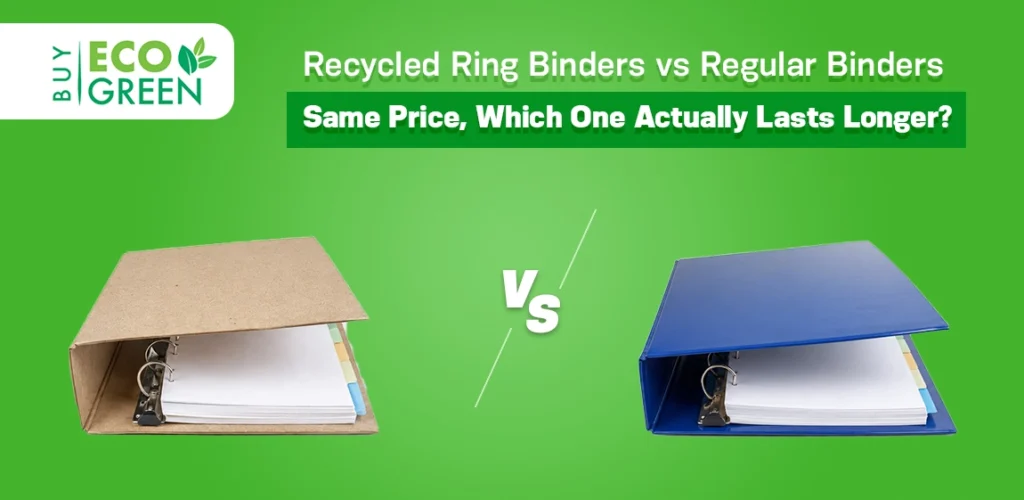
Most binders on the market are built from three separate materials fixed together: a rigid board core, a plastic or vinyl laminate wrapped over it, and a metal ring mechanism riveted to the spine. That construction looks neat and wipes clean, but it creates a specific weakness.
The plastic laminate is glued to the board. Over months of handling, that bond starts to give way at the corners and along the spine, which is the part of the binder that takes the most stress every time it is opened and closed. The laminate lifts, peels and eventually splits. Once the plastic separates from the board underneath, the cover loses its stiffness, the corners soften, and the binder starts to look tired well before the rings themselves have worn out. On cheaper binders, the ring mechanism can also drift out of alignment with use, and a small gap between the rings is the most common cause of pages tearing loose.
So a plastic binder often does not fail because the board wears through. It fails because two bonded materials that expand, flex and age at different rates were never going to stay stuck together indefinitely.
How a recycled kraft board binder holds up
A recycled ring binder made from 100 per cent recycled kraft paperboard removes that failure point entirely. There is no laminate to peel, because the cover is a single material. The board is left in its natural brown kraft finish, with no plastic coating and no synthetic lining bonded on top of it.
Recycled kraft board of this type is dense and stiff, and it holds its shape through daily office and classroom handling. Because nothing is layered on top of the board, there is no delamination and no peeling. The binder wears evenly rather than falling apart at the seams. The 2-ring metal mechanism does the same job as any standard binder, holding A4 hole-punched documents and letting you add, remove and reorder pages as often as you need.
The one honest limitation is moisture. Kraft board is paper-based, so it is not waterproof and should be kept away from sustained damp. In a normal filing environment, a desk, a shelf, a storeroom, that is not a meaningful constraint, and it is the same care you would already give to manila folders or copy paper.
The end-of-life difference that procurement teams miss
Working life is only half of the comparison. What happens to the binder afterwards is where the gap widens, and it is the part that institutional buyers with sustainability reporting obligations should pay closest attention to.
When a plastic-coated binder is finished, the plastic and the board are bonded together and cannot be easily separated. Recycling facilities are built to process single, clean material streams, so mixed-material products like these are generally rejected and sent to landfill. Every plastic binder your organisation retires is, in practical terms, a lump of mixed plastic and board headed for waste.
A recycled kraft binder ends differently. At the end of its life you separate the metal ring panel from the kraft board cover. The board goes into your paper or cardboard recycling, and the metal rings go into metal recycling. Both parts are single materials, so neither needs to go to landfill. For any organisation with a green procurement policy, an ESG report or a waste reduction target, that is a difference you can actually document rather than just claim. It also supports demand for the recycled fibre that kerbside collection recovers, which is what keeps recycling economically viable in the first place. There is more on that closed-loop point in our guide to cardboard recycling and types of cardboard.
So, same price, which one lasts longer
On a like-for-like comparison, the recycled kraft board binder is the stronger long-term buy. It avoids the peeling and delamination that shortens the working life of plastic-covered binders, it holds its shape through heavy use, and when it is eventually retired, it leaves recyclable materials instead of landfill waste. The plastic binder’s supposed advantage, a wipe-clean surface, is the very thing that fails first.
For a single binder, the difference is easy to overlook. Across a bulk order for a school, a department or a council team, a longer average working life and a cleaner disposal story add up to a genuinely better procurement decision at no extra cost per unit.
Ordering recycled binders in volume
Buyecogreen supplies recycled ring binders Australia-wide and regularly fulfils bulk orders for schools, councils, government departments and not-for-profits. The range covers the sizes and quantities institutional buyers need:
For higher-capacity filing, the Recycled Lever Arch File sits within the wider Ring Binders and Lever Arch Files range. To build a consistent filing setup from one supplier, these binders pair well with Manilla Folders, Document Wallets, Display Books and Dividers, Recycled Labels for spine and tab labelling, and Recycled Copy Paper to fill them.
Frequently asked questions
Do recycled kraft binders really last as long as plastic binders?
Yes, and often longer in practice. Plastic binders tend to fail when the laminate peels away from the board core, a failure that single-material kraft board does not have. The recycled ring binder wears evenly through daily use.
Are recycled ring binders more expensive than regular ones?
No. Recycled kraft board binders sit at a comparable price to standard plastic-covered binders, so the longer working life and recyclable end-of-life come at no cost penalty. Box quantities are available for bulk orders.
Can the binder be recycled at the end of its life?
Yes. Separate the metal ring panel from the kraft board cover. The board goes into paper or cardboard recycling and the rings go into metal recycling. Because both are single materials, nothing needs to go to the landfill.
Why does the brown colour vary between binders?
The natural kraft finish is made from post-consumer recycled pulp, so the shade varies slightly batch to batch. This is normal and confirms genuine recycled content. Binders within the same box of 24 are generally a consistent tone.
Do you supply recycled binders to schools and government organisations?
Yes. Buyecogreen regularly supplies schools, councils, government departments and not-for-profits across Australia. For bulk quantities or regular supply, call 1300 663 488 or email info@buyecogreen.com.au.
Order recycled ring binders for your organisation
If your school, council, office or community group is reviewing its filing supplies, recycled kraft board binders are a straightforward upgrade that costs no more and lasts longer. To arrange a bulk order or request a quote for regular supply, call the Buyecogreen team on 1300 663 488 or email info@buyecogreen.com.au. We supply Australia-wide and can help you match quantities to your organisation’s needs.