Eco Glue Guide: Non-Toxic Glue for Schools and Craft (Clag vs PVA vs Glue Sticks)
Glue is one of the highest-turnover consumables in any classroom, early learning room or office supply cupboard. It is also one of the simplest items to swap for a safer, lower-impact option without changing how staff or students work. The catch is that “glue” covers three different formats, and the right choice depends on who is using it and what they are sticking. This guide sets out the practical differences between starch paste, PVA-style liquid glue and glue sticks, so procurement officers, teachers and centre directors across Australia can order with confidence from the Buyecogreen eco glue range.
What “Non-Toxic” and “Solvent-Free” Actually Mean?
Two labels matter most when buying adhesives for schools and childcare settings. Non-toxic means the product is formulated to be safe in normal use, including the incidental contact that happens when young children handle glue during art and craft work. Solvent-free means the glue is water-based rather than dissolved in synthetic solvents such as aromatics, which can affect both indoor air quality and the environment. A water-based, solvent-free adhesive washes out with soap and water, carries a neutral odour, and is the sensible baseline for any institutional buyer. Every product in the Buyecogreen eco glue range is selected against these standards.
The Three Glue Formats Australian Classrooms Use
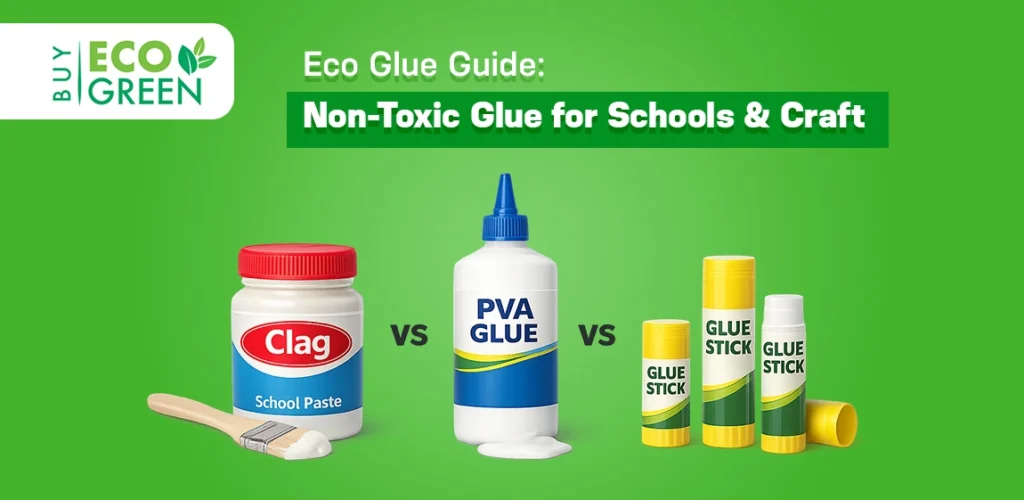
Starch Paste (Clag)
Starch paste is the traditional school glue most Australians grew up with. The Clag Paste 150g tub is made from wheat starch dissolved in a water base, which makes it generally safe if accidentally swallowed, though it is worth noting for anyone with a wheat intolerance. The recessed brush in the lid is easy for small hands to manage, and there are no small parts a child could swallow. It suits paper and card collage in early learning rooms and junior primary classrooms, sticking quickly and drying in around ten to twenty minutes.
PVA-Style Liquid Glue
PVA stands for polyvinyl acetate, the white liquid glue that dries clear and bonds well on porous materials like paper, card and lightweight timber. Standard PVA is a synthetic, petroleum-derived polymer, and while it is usually washable and non-toxic, it carries a higher environmental load through its materials and packaging. For institutions that want a liquid glue without that footprint, the eco route is a non-toxic, biodegradable water-based liquid glue that washes off while wet and bonds a wide range of materials. One practical note for classrooms: liquid glue holds more water, so thin paper can wrinkle if too much is applied.
Glue Sticks
Glue sticks are the tidiest option for everyday paper tasks. The Buyecogreen EcoLogo Glue Stick range is solvent-free, vegan and made from natural materials, with a body moulded from 100% recycled plastic and a window gauge showing how much glue is left. They wash out in water and produce no drips, which makes them ideal for individual student kits and mounting flat work. The 20g medium stick suits shared classroom tubs, while the 40g large stick is a better fit for high-use office cupboards and busy art rooms.
Quick Comparison: Which Glue for Which Job
Format
Best for
Age suitability
Eco notes
Starch paste (Clag)
Paper and card collage, junior craft
Early learning and junior primary
Wheat starch, water-based, non-toxic
Eco liquid glue
Card, timber and mixed materials
Older primary upward, with supervision
Water-based, non-toxic, biodegradable
EcoLogo glue stick
Mounting, flat paper work, student kits
All ages
Solvent-free, recycled-plastic body, ISO 14001 made
How to Choose the Right Eco Glue for Your Setting?
Match the format to the room. Early learning and kindergarten settings tend to run best on starch paste and glue sticks, since both are forgiving, low-mess and safe for young hands during daily use. Primary and secondary art rooms benefit from a mix, with glue sticks for individual work and a liquid glue on hand for heavier card and mixed-material projects. Offices and administration areas usually need only a supply of larger glue sticks for mounting, folders and general tasks. Ordering a spread of sizes lets one product line cover student kits, shared tubs and staff use without over-buying.
Why the Eco Choice Matters at Institutional Volume?
A single glue stick seems minor. Multiplied across hundreds of students, a term of craft sessions and a full school year, conventional adhesives add up to a steady flow of petroleum-based material and virgin plastic packaging. Choosing solvent-free, natural-material glue turns a routine reorder into a measurable reduction in plastic and chemical inputs. For sustainability officers, it is a straightforward line item that supports waste-reduction targets and safer purchasing policies, and it is easy to document in environmental reporting. Pairing glue with the rest of a sustainable order, such as eco art and craft materials and recycled scissors, keeps the whole classroom kit consistent.
Ordering Eco Glue in Bulk Across Australia
Buyecogreen supplies schools, education departments, councils, government organisations, childcare centres, not-for-profits and eco-conscious businesses. Adhesives rarely ship alone, so building a standing consumables list keeps procurement consistent and reduces freight movements from multiple suppliers. Glue sits neatly alongside biodegradable sticky tape, school stationery items and accessories and the wider eco-friendly school supplies range, so an organisation can consolidate its green purchasing with one reliable supplier and meet its sustainability commitments in a single order.
Frequently Asked Questions
Is Clag paste safe for young children in childcare centres?
Yes. Clag is a wheat starch and water paste that is non-toxic and generally safe if swallowed. Children with a wheat intolerance should be supervised, as ingestion may trigger an allergic reaction.
Is PVA glue eco-friendly?
Standard PVA is a synthetic, petroleum-based polymer, so it is not the lowest-impact option. For a greener liquid glue, choose a non-toxic, biodegradable water-based adhesive from the Buyecogreen eco glue range instead.
Which is better for schools, glue sticks or liquid glue?
Glue sticks are cleaner and quicker for flat paper work and student kits. Liquid glue suits heavier card and mixed materials. Most classrooms keep both on hand for different tasks.
Can we order eco glue in bulk for a whole school or council?
Yes. Buyecogreen supports bulk procurement for schools, councils, government departments, childcare centres and businesses across Australia, with reliable supply for high-volume institutional use.
What sizes do EcoLogo glue sticks come in?
They are available in small 10g, medium 20g and large 40g. This makes it easy to match individual student kits, shared classroom tubs and busy office cupboards.
Order Non-Toxic Eco Glue for Your Organisation
Ready to swap conventional adhesives for a safer, lower-waste option? The Buyecogreen team can help you build a standing consumables list that fits your setting and your sustainability targets. Call 1300 663 488 or email info@buyecogreen.com.au to arrange a wholesale enquiry.