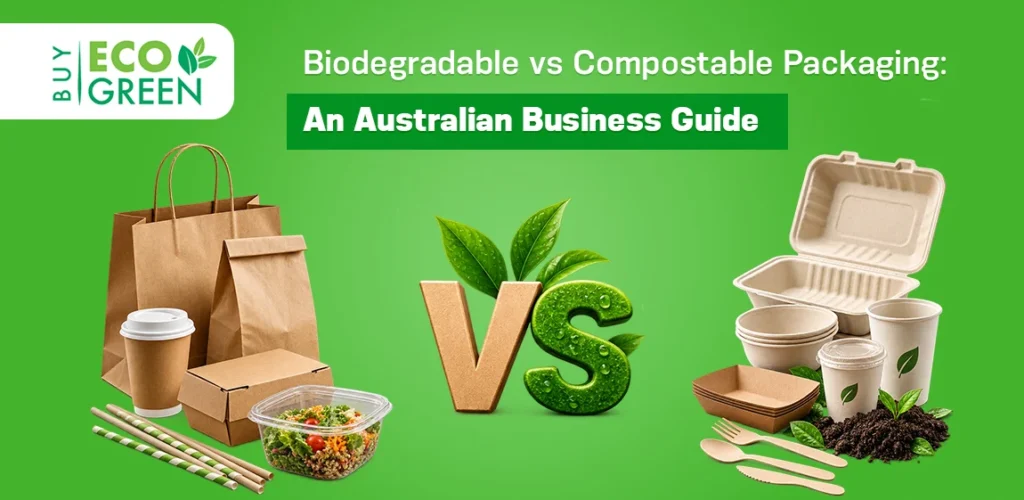
Biodegradable vs. Compostable Packaging: An Australian Business Guide
Biodegradable means a material will eventually break down through natural biological processes, with no set timeframe, no defined conditions and no guarantee about what it leaves behind. Compostable means a material has been tested to break down within a specific period under defined composting conditions, leaving no toxic residue. In Australia, compostable claims are backed by two certification standards: AS 4736 for commercial composting facilities and AS 5810 for home composting. Biodegradable, on its own, is backed by nothing.
That distinction matters more for organisations than for households. When a Sydney business, school or council chooses packaging at institutional volume, the difference between a verified claim and a vague one flows through to waste contracts, sustainability reporting and compliance with tightening state regulations. This guide explains both terms properly, then works through the question that actually decides the purchase: which disposal pathway will this packaging really end up in?
What biodegradable actually means?
Almost everything biodegrades eventually, including materials that take decades and shed harmful fragments along the way. That is the core weakness of the word. Some products marketed as biodegradable are conventional petroleum plastics with additives that accelerate fragmentation. The plastic breaks into smaller and smaller pieces, and those pieces persist in soil and waterways as microplastics.
Genuinely biodegradable materials do exist, and they are usually the ones that were never plastic to begin with. Paper, kraft, cardboard, cellulose film and plant-fibre products break down through natural processes into organic matter because they are organic matter. Our existing guide to biodegradable packaging covers these materials in detail. The practical rule for procurement teams: a biodegradable claim is only meaningful when the material itself is plant-based and the supplier can say what it is made from.
What compostable actually means?
Compostable is the stricter, verified claim. Under AS 4736, a product must substantially convert to carbon dioxide, water and biomass within 180 days in a commercial composting facility, disintegrate to fine particles within 12 weeks, and leave no toxic residue in the finished compost. Under AS 5810, the product must achieve the same outcome in the cooler, less controlled conditions of a home compost system. The Australasian Bioplastics Association administers certification in Australia, and certified products carry the relevant logo.
The certification distinction has a practical edge. An AS 4736 certified product needs a commercial composting facility to break down as tested. If your organisation’s waste contractor does not collect organics, that certified compostable item goes to landfill, where the cold, oxygen-starved conditions prevent it from composting at all.
The comparison at a glance
Biodegradable
Certified compostable
Timeframe
Undefined
180 days (AS 4736) or tested home timeframe (AS 5810)
Conditions
Undefined
Defined composting conditions
Residue
No guarantee
Verified non-toxic
Australian standard
None
AS 4736, AS 5810
Verification
Supplier’s word
Independent certification
The disposal pathway decides everything
Here is the question that should sit above both terms on any procurement checklist: where will this packaging actually go after use?
Many Sydney councils now operate food organics and garden organics (FOGO) collections, and NSW has legislated a wider rollout across the coming years. Organisations with access to an organics stream, whether through council collection or a commercial contractor, can genuinely close the loop with certified compostable packaging. Cafeterias, school canteens, childcare centres and event catering are the obvious fits.
Organisations without an organics stream face a different calculation. Compostable packaging headed for landfill delivers almost none of its promised benefit. In that situation, recyclable packaging made from recovered paper and cardboard is usually the stronger environmental choice, because Australia’s paper recycling system is mature, widely available and genuinely circular. A recycled cardboard box that gets recycled again beats a certified compostable item buried in landfill. Our cardboard recycling guide covers how that paper loop works in practice.
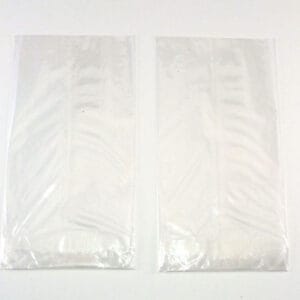
The best packaging materials clear every pathway at once. Genuine cellulose cellophane bags and sheets, made from plant fibre rather than petroleum, are biodegradable and suitable for commercial composting. Recycled kraft, tissue and board products are recyclable, biodegradable and compostable in home systems. Materials like these remove the risk of choosing the wrong pathway, because there is no wrong pathway.
A decision framework for organisations
Work through four questions before committing to a packaging material at volume.
First, what does your waste stream support? Audit whether your sites have organics collection, paper recycling, or general waste only. The answer immediately narrows your material options.
Second, is the claim verified? Accept AS 4736 or AS 5810 certification for compostable claims. For biodegradable claims, require the supplier to state the material. Plant fibre, paper and cellulose qualify. Unnamed “eco” films do not. Regulators are also watching: vague environmental claims now carry genuine greenwashing risk under Australian consumer law, and that risk transfers to organisations that repeat unverified supplier claims in their own reporting.
Third, does the material match the job? Mailing, gift presentation, food contact and retail packaging each have workable options across recyclable and compostable materials. Our guide to sustainable packaging solutions maps materials to applications in detail.
Fourth, does the whole package stay in one stream? A recyclable box sealed with plastic tape is contaminated packaging. Paper-based recyclable packaging tape keeps the entire parcel in the paper stream, and the same logic applies to labels, fillers and wrap.
Sourcing eco-friendly packaging Australia-wide
Buyecogreen supplies schools, councils, government departments, not-for-profits and businesses from Sydney to Perth with packaging that holds up against every question above. The range spans cellulose cellophane, recycled tissue paper, kraft wrap, recycled gift boxes made from 100 per cent post-consumer board, biodegradable bags in cellulose film, and paper-based tapes and accessories. Materials are recycled, plant-based or both, so procurement teams are never relying on an unverifiable claim.
For organisations weighing up the cost side of the switch, our guide to sustainable packaging for SMEs works through the commercial case. To arrange bulk supply or talk through which materials suit your waste streams, call the Buyecogreen team on 1300 663 488 or email info@buyecogreen.com.au.
Frequently asked questions
What is the main difference between biodegradable and compostable?
Compostable is a verified claim: the material breaks down within a defined timeframe under defined conditions, leaving no toxic residue, certified under AS 4736 or AS 5810. Biodegradable has no timeframe, no conditions and no certification standard in Australia.
Is compostable packaging better than biodegradable packaging?
Usually, because the claim is independently tested. The exception is when no organics collection exists. Certified compostable packaging sent to landfill barely breaks down, so recyclable paper-based packaging is often the better choice for those organisations.
Can compostable packaging go in the recycling bin?
No. Compostable bioplastics contaminate plastic recycling, and compostable-coated items can contaminate paper recycling. Compostable packaging belongs in an organics stream where one is available. Plain paper, kraft and cardboard packaging belong in paper recycling.
What are AS 4736 and AS 5810?
AS 4736 is the Australian standard for commercial compostability, requiring breakdown within 180 days in an industrial facility. AS 5810 certifies home compostability under cooler backyard conditions. Both verify complete breakdown with no toxic residue.
Are biodegradable bags genuinely eco-friendly?
Only when made from plant-based materials such as cellulose, paper or plant fibre. Bags made from conventional plastic with degradation additives fragment into microplastics. Ask the supplier what the bag is made from before ordering at volume.