Different Types of Gift Wrap: A Complete Guide for Businesses, Schools, and Organisations
Gift wrapping is rarely the first thing on a procurement list, but it appears in almost every Australian organisation at some point during the year. School fundraiser prizes, corporate end-of-year gifts, council community event hampers, childcare centre celebration packs, not-for-profit donation acknowledgements, and staff recognition gifts all require some form of presentation packaging.
The problem is that most gift wrap purchased without much thought ends up being exactly that: a throwaway choice. Glossy papers coated in plastic laminate, foil finishes loaded with metallics, and glitter-dusted wrapping that contaminates recycling streams are all still widely sold, and many organisations buy them simply out of habit.
For schools, businesses, councils, and community groups working toward sustainability targets, the type of gift wrap your organisation chooses is a small but entirely avoidable source of waste. And with a strong range of genuinely eco-friendly options available, there’s no operational reason to keep reaching for wrapping that heads straight to landfill after a single use.
This guide covers every major type of gift wrap, explains what each one is made from, outlines which organisational contexts each suits best, and helps procurement teams and administrators make choices that align with both practical needs and environmental values.
Why Gift Wrap Choices Matter in an Institutional Context
Before getting into the types themselves, it helps to understand why this decision deserves more attention than it typically receives.
Australians use an estimated 150,000 kilometres of wrapping paper over the Christmas period alone, enough to circle the planet multiple times. A significant proportion of that wrapping cannot be recycled because it contains plastic coatings, metallic laminates, or glitter. It goes directly to the landfill, regardless of whether it ends up in a recycling bin.
For organisations with formal sustainability reporting obligations, packaging waste, including gift wrap, is a trackable and reportable area. Choosing a wrap that is genuinely recyclable, compostable, or reusable contributes to waste diversion figures and supports broader environmental compliance commitments.
Beyond reporting, gift wrap is a visible expression of your organisation’s values. What your school, council, or business chooses to wrap its gifts in communicates something about how seriously it takes sustainability, not just in policy language, but in practice.
Buyecogreen supplies gift wrapping and sustainable packaging to Australian schools, councils, businesses, childcare centres, and not-for-profit organisations. The options below represent the full range of wrapping types your organisation is likely to encounter, with honest guidance on which are genuinely eco-friendly and which are not.
1. Kraft Paper: The Most Versatile and Widely Applicable Option
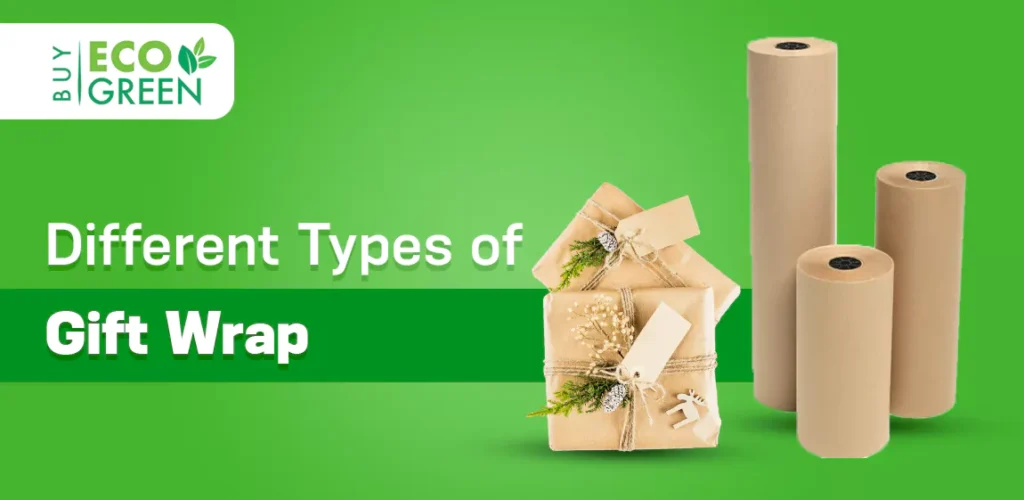
Kraft paper is the standout choice for organisations that need a practical, high-volume, genuinely eco-friendly wrapping solution. It is made from wood pulp using a process that retains more of the wood fibre’s natural lignin, resulting in a strong, durable paper with a characteristic natural brown appearance.
Plain, uncoated kraft paper is fully recyclable through standard kerbside recycling and biodegrades naturally when it reaches the end of its useful life. It contains no plastic laminate, no metallic coating, and no glitter, which means it doesn’t contaminate recycling streams the way many decorative wrapping papers do.
In an institutional context, Kraft paper works across a broad range of applications:
- Wrapping prizes, hampers, and gifts at school events and fundraisers
- Packaging corporate gifts and staff recognition presents
- Wrapping products for market stalls and community fair displays
- Covering and presenting resource packs, award certificates, and seasonal gifts from councils
- Lining gift boxes and hamper baskets before adding product
- Bundling multiple items together for community distribution programs
Kraft paper rolls are the most practical format for organisations buying in volume. A single roll covers a large number of items, stores compactly, and gives wrapping staff flexibility in how much they use for each gift, regardless of shape or size.
The natural appearance of kraft paper also responds well to simple, natural decoration. Cotton twine, recycled ribbon, dried botanicals, or a simple handwritten gift tag give kraft-wrapped parcels a considered, premium presentation without adding non-recyclable elements to the package.
Buyecogreen stocks kraft paper rolls made from recycled stock, making this one of the most environmentally responsible wrapping choices available to organisations of any scale.
2. Tissue Paper: The Interior Layer That Elevates Presentation
Tissue paper is a lightweight, fine-grade paper used primarily as a lining inside gift bags, boxes, and hamper baskets rather than as a standalone outer wrap. It adds volume, protects the contents, and gives the recipient something to move through before reaching the gift itself, which improves the overall presentation experience.
In the context of sustainable procurement, tissue paper quality varies significantly. Standard tissue paper is made from short wood fibres and is often too fine and fragile to be recycled through kerbside paper recycling, as the fibres break down too easily in the recycling process. However, recycled tissue paper made from post-consumer waste is widely available and represents a meaningful improvement from a procurement standpoint, even if it shares the same limitations in the recycling stream.
For compostability, plain unbleached tissue paper without dyes or coatings will break down in a composting environment. Coloured tissue paper may contain dyes that affect compostability, depending on the specific product and certification.
Organisations use tissue paper most frequently for:
- Lining gift bags at school events, awards nights, and community celebrations
- Wrapping individual items inside gift boxes to prevent movement during transport
- Adding colour and presentation to hamper baskets for fundraising events, donor acknowledgements, or council community programs
- Displaying products at market stalls and eco-focused retail environments
- Padding and presenting items in corporate gifting situations
For schools and childcare centres, tissue paper also has a role in arts and craft activities, paper maché projects, collage work, and sensory play materials, making it a dual-purpose procurement item that supports both packaging and educational program needs.
Buyecogreen supplies recycled tissue paper suited to institutional and business use, available in quantities appropriate for both regular operational needs and seasonal event preparation.
3. Recycled Wrapping Paper: A Greener Version of a Familiar Format
Recycled wrapping paper looks and functions like conventional decorative wrapping paper but is manufactured using post-consumer recycled paper stock rather than virgin materials. It is typically printed with water- or soy-based inks rather than solvent-based inks, which reduces the chemical load associated with production.
The key distinction to understand here is that recycled wrapping paper is not the same as recyclable wrapping paper, though ideally, a product should be both. Paper made from recycled content reduces the demand for newly harvested timber and diverts post-consumer waste from landfill during production. Whether it can be recycled depends on whether it contains coatings, laminates, or finishes that contaminate the recycling stream.
When evaluating recycled wrapping paper for organisational use, look for:
- Paper manufactured from post-consumer recycled content, with the percentage clearly stated
- Printing with water-based or soy-based inks
- No plastic coating, laminate, or metallic finish
- Certification from responsible forestry or recycled content programs
- Recyclability is confirmed either through product labelling or supplier documentation
Recycled wrapping paper in roll format is the most practical for bulk institutional use. Sheet formats can be more wasteful for larger items, as staff often need to cut and combine sheets to adequately cover a gift.
This wrapping type suits organisations that want the familiar look and ease of use of conventional roll-format wrapping paper, but with a meaningfully lower environmental footprint. For schools managing large gift-wrapping programs during end-of-year events, or businesses wrapping gifts for staff at scale, recycled roll wrapping paper offers a practical middle ground between standard decorative paper and kraft.
4. Recycled Gift Boxes: When Presentation Requires Structure
Not every gift can or should be wrapped in paper. Items of an irregular shape, fragile contents, or presentations that need to hold their form during transport are better served by a gift box than by wrapping paper.
Recycled gift boxes are manufactured from post-consumer recycled cardboard, using board stock recovered from households, offices, and industrial sources. They provide structural protection for the contents, stack efficiently for storage and transport, and present well with minimal additional wrapping, often requiring only a ribbon, a gift tag, or a layer of tissue paper inside to complete the presentation.
For Australian organisations with sustainability reporting obligations, recycled cardboard boxes are among the most traceable and verifiable eco-friendly packaging options available. The recycled content of the board is typically quantifiable, recyclability after use is well understood and supported by kerbside collection systems, and the manufacturing footprint is measurable.
Common institutional uses for recycled gift boxes include:
- Presenting staff recognition gifts, service awards, and farewell presents in a professional format
- Packaging fundraiser prizes and raffle gifts at school and community events
- Displaying and distributing corporate gifts to clients, partners, and stakeholders
- Hamper and gift set assembly for council community programs and not-for-profit donor acknowledgements
- Retailer and eco-focused market stall product presentation
Buyecogreen’s recycled gift boxes are made from 100 per cent recycled cardboard using post-consumer waste paper, supporting a circular material flow that conserves trees, water, and energy compared to virgin board production.
5. Recycled Gift Bags: The High-Turnover Solution for Event and Retail Contexts
Paper gift bags made from recycled kraft or recycled paper stock are among the most practical wrapping solutions for organisations managing high volumes of gift presentation at speed. They require no cutting, no measuring, and no tape, making them significantly faster for staff to use than any roll-wrapping method, particularly during busy event periods.
For schools running end-of-year celebrations, councils organising community events, childcare centres preparing family packs, or not-for-profit organisations distributing donor gifts, paper gift bags reduce the time and labour cost of gift presentation without compromising on appearance.
From an environmental standpoint, paper gift bags made from recycled content and without plastic laminate or glitter finish are recyclable and, where uncoated, biodegradable. They are a significant improvement over plastic gift bags and over non-recyclable decorative paper alternatives.
Gift bags in a B2B context are typically ordered in standard sizes suited to the organisation’s most common gift dimensions. Having two or three sizes in stock covers most needs without overstocking.
Key considerations when ordering recycled gift bags in bulk:
- Confirm the paper is made from recycled content rather than simply having a natural appearance
- Choose bags with paper or cotton rope handles rather than plastic handle attachments
- Verify that no plastic window panels or laminated finishes are present
- Match sizes to the typical items you’re packaging to minimise material use per gift
6. Raffia and Natural Ribbon: The Finishing Touch That Matters
What you use to tie, close, and decorate a wrapped gift affects its overall environmental footprint just as much as the wrapping material itself. This is a detail that’s often overlooked in gift procurement, and it’s where many otherwise eco-conscious wrapping choices fall short.
Plastic ribbon, synthetic bows, and metallic curling ribbon are all non-recyclable and non-biodegradable. When attached to otherwise recyclable paper, they must be removed before the paper can be recycled, and in practice, most recipients don’t do so. The result is that recyclable wrapping ends up in general waste because of a non-recyclable ribbon that costs very little to replace with a better option.
Natural alternatives that work well in institutional gift presentation include:
Raffia: A natural plant fibre ribbon derived from palm leaves. It is biodegradable, compostable, and gives gift presentations a warm, natural aesthetic that suits kraft paper wrapping particularly well. Raffia is available in natural, undyed form and in a range of colours. For organisations with sustainability commitments, undyed natural raffia is the most credible environmental choice.
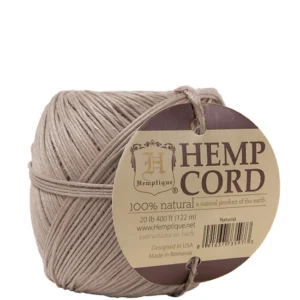
Cotton twine and jute string: Both are natural, biodegradable, and compostable. They provide a simple, clean finish on kraft-wrapped parcels and pair well with a gift tag for a complete presentation. Cotton twine is softer and more suitable for presentations requiring a clean, professional finish. Jute string is coarser and better suited to rustic or nature-based presentations.
Recycled paper ribbon: Ribbon manufactured from recycled paper stock offers a more conventional ribbon appearance than twine while remaining fully recyclable and biodegradable. It is a practical option for organisations that want the look of traditional ribbon without the environmental compromise of synthetic alternatives.
Natural fibre woven ribbon: Some ribbon products are woven from cotton or other natural fibres and can be composted at end of life. These are typically more expensive than disposable alternatives but perform well in premium gift presentations.
For organisations wrapping gifts in volume, choosing a single natural ribbon or twine type and ordering in bulk keeps costs manageable while maintaining consistency across all gift presentations.
7. Tissue Paper Rolls and Paper Rolls for Multipurpose Use
Beyond standard gift-wrapping formats, recycled paper rolls serve a broader role in school, office, and community settings, making them a particularly practical item for bulk procurement.
A large roll of recycled kraft paper or white recycled paper can be used for:
- Gift wrapping individual items at any scale
- Lining shelves, drawers, and storage units in classrooms and stockrooms
- Creating display backgrounds and classroom wall decorations
- Providing drawing and activity paper for students in art classes and craft programs
- Packing and protecting fragile items for storage or transport
- Creating banners, signs, and visual displays for school events and community functions
For schools and childcare centres, this multipurpose utility makes recycled paper rolls one of the most cost-effective sustainable supply items available. A single bulk purchase covers multiple functional needs across a term or year, reducing the number of separate procurement decisions required.
Buyecogreen stocks recycled paper rolls in formats suited to both gift wrapping and broader institutional use, supporting organisations that want to consolidate their paper procurement into fewer, more sustainable product lines.
8. Gift Wrap Accessories: Tags, Seals, and Finishing Items
A complete gift-wrap procurement plan for any organisation includes the accessories that make wrapping both functional and presentable. These smaller items are often purchased as afterthoughts, but making sustainable choices across all wrapping accessories reinforces the environmental commitment that drives the main wrapping choice.
Gift tags: Recycled-card gift tags with natural-fibre strings are fully recyclable and add a personal, handwritten element to any gift presentation. They are essential for any organisational gift program where gifts need to be labelled for recipients.
Paper tape: Standard plastic adhesive tape is not recyclable and prevents the paper it’s applied to from being recycled. Paper tape, also known as washi tape or kraft tape, is a water-activated or pressure-sensitive tape made from paper stock. It is recyclable with the wrapping and biodegrades naturally, making it the appropriate adhesive choice for any eco-conscious wrapping program.
Washi tape: A decorative paper tape with patterns, available in a range of designs. It is made from Japanese washi paper using plant-based adhesive. Washi tape is used to seal wrapping, add decorative borders, and personalise plain kraft paper. It is recyclable and biodegradable, making it a genuinely eco-friendly decorative accessory for wrapping programs in schools, offices, and community settings.
Stamps and ink pads: For schools and community organisations wanting to personalise plain kraft paper wrapping at scale, rubber stamps with water-based ink pads allow staff and students to add patterns, messages, and logos to wrapping paper efficiently. This is particularly useful for school events where a consistent presentation style is desired without the cost of specialty printed wrapping paper.
What to Avoid: Gift Wrap That Undermines Sustainability Commitments
Understanding which types of gift wrap to choose is only half the picture. Knowing which types to avoid is equally important, particularly for organisations that communicate sustainability commitments publicly or report on environmental procurement.
Glossy laminated wrapping paper: The shiny finish on most decorative roll wrapping paper is produced by a plastic laminate coating. This coating prevents the paper from being recycled and means it will sit in a landfill indefinitely. It cannot be removed by recycling facilities.
Foil and metallic wrapping paper: Produced by bonding a metallic film to paper, foil wrapping paper cannot be recycled. Even if the paper component is recyclable in isolation, the metallic layer makes separation impractical at standard recycling facilities.
Glitter finishes: Glitter on wrapping paper, gift bags, and tissue paper is made from microplastics. It enters waterways during washing and manufacturing processes and cannot be removed during recycling. Wrapping with glitter finishes is neither recyclable nor compostable.
Plastic cellophane wrap: Cellophane and clear plastic wrap used to cover hampers, gift baskets, and product displays are generally not recyclable through kerbside systems and contribute directly to plastic waste. Natural alternatives, including brown paper, kraft paper, or tissue paper lining, are more environmentally appropriate for hamper and basket presentation.
Synthetic ribbon and plastic bows: As discussed in the ribbon section above, synthetic finishing materials contaminate otherwise recyclable wrapping. They are a simple substitution that many organisations overlook.
Choosing the Right Gift Wrap for Your Organisation
With a clear understanding of the available types and their environmental credentials, selecting the right gift wrap for your context becomes straightforward. Here is a practical summary:
| Context | Recommended Wrap | Finishing |
| School event prizes and gifts | Kraft paper roll or recycled gift bags | Natural raffia or cotton twine |
| Corporate staff gifts | Recycled gift box with tissue lining | Recycled ribbon or raffia |
| Council community event packs | Recycled gift bags or kraft roll | Paper gift tag, cotton twine |
| Fundraiser hampers and baskets | Kraft paper or tissue paper lining | Raffia, natural ribbon |
| Childcare centre family gifts | Recycled gift bags, small gift boxes | Paper tags, washi tape |
| Not-for-profit donor gifts | Recycled gift boxes or kraft wrap | Recycled ribbon, gift tag |
| Classroom art and resource packs | Tissue paper or kraft paper roll | Paper tape or washi tape |
| Eco retail product presentation | Kraft paper bags, recycled tissue | Natural twine, kraft gift tag |
Sustainable Gift Wrapping as Part of a Broader Procurement Strategy
For organisations working toward formal sustainability targets, gift wrapping is one of many small, practical procurement changes that contribute to measurable outcomes. On its own, switching to recycled kraft paper or eco-friendly gift bags is a modest step. Combined with broader procurement decisions across stationery, packaging, office supplies, and cleaning products, it becomes part of a consistent and credible environmental commitment.
Buyecogreen supports Australian organisations in building that consistency. Our gift wrap and sustainable packaging range, including kraft paper rolls, recycled tissue paper, recycled gift boxes, paper gift bags, raffia, natural twine, and gift tags, is designed to meet the practical needs of schools, councils, businesses, childcare centres, and not-for-profit organisations ordering on an institutional scale.
Every product in our range is selected to satisfy at least two of our environmental criteria: recycled content, biodegradability, compostability, reusability, responsible sourcing, or reduced environmental impact compared to conventional alternatives.
If you’d like to discuss your organisation’s gift wrapping and packaging requirements, explore our full range, or get guidance on which products best support your sustainability reporting commitments, the Buyecogreen team is ready to help.
Frequently Asked Questions
Is Kraft paper actually recyclable, and can our organisation use it as a standard wrapping choice for all events?
Yes, plain uncoated kraft paper is fully recyclable through standard Australian kerbside paper recycling and is biodegradable at the end of life. Provided it hasn’t been heavily contaminated with food or wet materials, it can go directly into your paper recycling stream after use. For institutional use, a Kraft paper roll is one of the most practical and environmentally credible choices available. It works across virtually every gift-wrapping context, from school prize bags to corporate hamper lining, and can serve as a consistent standard wrapping choice regardless of occasion or recipient. The natural brown appearance is also well-suited to simple, natural decoration using raffia, cotton twine, or a recycled paper gift tag, which gives wrapped items a considered, professional finish without adding non-recyclable elements to the package.
How can our school or organisation tell whether wrapping paper is genuinely recyclable?
The most reliable quick test is the scrunch test: scrunch a piece of the wrapping paper in your hand and release it. If it holds its scrunched shape, it is generally paper-based and likely recyclable. If it springs back to its original flat state, it contains a plastic laminate or coating and cannot be recycled. Beyond this test, look for explicit recyclability labelling on the packaging, such as the Australasian Recycling Label (ARL), or descriptions indicating that the paper is uncoated, printed with water-based inks, and free from metallic or glitter finishes. Foil paper, glossy laminated paper, and any paper with a visible sheen or glitter should be assumed non-recyclable unless specific certification states otherwise. When ordering gift wrap in bulk for your organisation, ask your supplier to confirm recyclability credentials before purchase rather than relying on general descriptions like “eco” or “natural” without supporting detail.
What is the most practical gift wrapping format for organisations managing large-scale events like school fairs or council community days?
Paper gift bags made from recycled kraft or recycled paper stock are typically the most practical format for large-scale event wrapping. They require no cutting, measuring, folding, or taping, which significantly reduces the time and labour compared to wrapping rolls across dozens or hundreds of items. Staff can fill, fold, and present a gift bag in a fraction of the time it takes to wrap the same item in roll paper, which matters considerably when event preparation is being managed alongside other operational demands. Pre-ordering bags in two sizes, a standard medium and a larger format, covers most gift dimensions without needing a wide range of different bag sizes on hand. If your event includes hampers or baskets that don’t suit a bag format, a kraft paper roll combined with natural raffia is the next most practical option for high-volume presentation at speed.
Can recycled tissue paper be used in composting programs, and is it suitable for schools running food organics composting?
Plain, unbleached recycled tissue paper without dyes or coatings can generally be composted in both home and industrial composting environments, as it is a natural cellulose-based material that breaks down readily. For schools and organisations running FOGO (food organics and garden organics) programs, plain unbleached tissue paper can be composted alongside food scraps, provided it hasn’t been treated with any chemical coatings or printed with solvent-based inks. Coloured tissue paper is more variable: some dyes used in coloured tissue are plant-based and compostable, while others are synthetic and may not be appropriate for a certified composting stream. If compostability is a priority for your school’s waste management program, confirm with your supplier that the tissue paper is unbleached and dye-free, or ask for certification documentation that supports composting claims. Buyecogreen can provide product information to support your waste management and reporting requirements.
Does choosing eco-friendly gift wrap contribute to our organisation’s sustainability reporting, and how do we document it?
Yes, purchasing eco-friendly gift wrap and sustainable packaging is a documentable procurement action that can be included in sustainability reporting, particularly for organisations operating under green procurement policies, council environmental plans, school sustainability frameworks, or government department procurement guidelines. The key to making it reportable is maintaining clear procurement records that specify the environmental credentials of the products purchased, including the percentage of recycled content, recyclability status, compostability certification, and responsible sourcing credentials, where applicable. When ordering through Buyecogreen, you can request product information outlining each product’s environmental attributes, which can be filed as supporting documentation for your reporting cycle. Over time, consistent procurement of eco-friendly wrapping and packaging across your organisation builds a trackable record of waste reduction and responsible sourcing decisions, which strengthens both internal reporting and any public-facing sustainability communications your organisation produces.
Buyecogreen supplies eco-friendly, recycled, and sustainably sourced gift wrap, tissue paper, kraft paper, gift boxes, gift bags, and packaging accessories to schools, councils, government organisations, businesses, childcare centres, and community groups across Australia.
Top Products
-
-
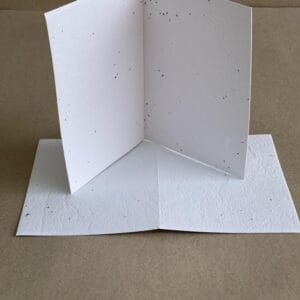
Seeded Recycled Paper Cards A6 (weeping bottlebrush) (Pack of 20)
$44.00 (incl. tax)
$40.00 (excl. tax) Add to cart -
-
-
-
-
-