
Tote Bags Size Guide: How to Choose the Perfect Dimensions for Your Needs
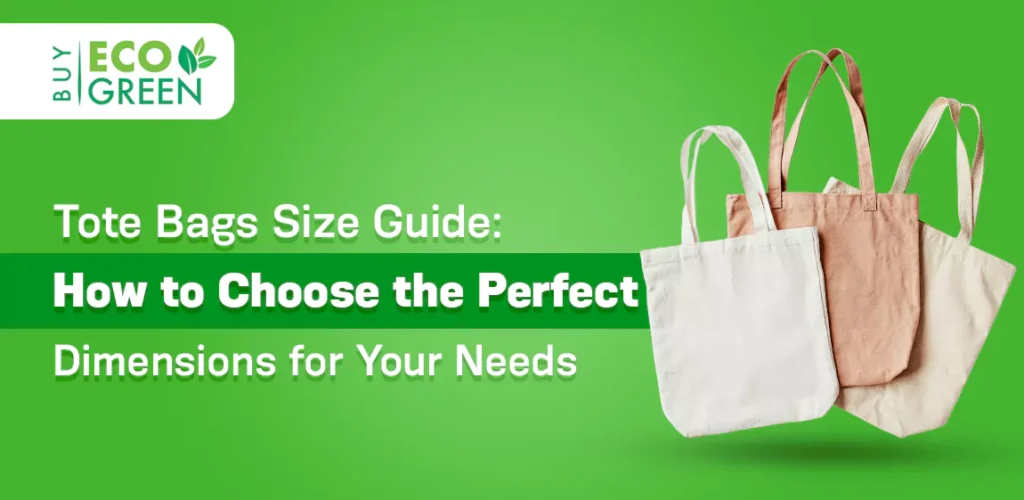
Walk through any Australian school, council office, community event, or business conference and you’ll spot them everywhere. Tote bags have become a staple of sustainable procurement, and for good reason. They replace single-use plastic, they last through years of regular use, and they carry a visible signal about the values of the organisation that handed them out or put them to work.
But choosing the wrong size creates real problems. A tote that’s too small can’t carry what it’s supposed to. One that’s too large becomes unwieldy, sags without support, and often gets left behind rather than carried. For organisations ordering tote bags in volume, whether for school resources, community programs, staff use, event giveaways, or bulk resale, getting the dimensions right from the start avoids waste, returns, and reorders.
This guide covers every measurement that matters when selecting a tote bag, explains how different sizes map to different institutional uses, and helps procurement teams, school administrators, sustainability officers, and event coordinators make a confident, well-informed decision before placing a bulk order.
Why Tote Bag Dimensions Matter More Than You’d Expect
Most organisations ordering tote bags in bulk focus primarily on material and price. Size is often treated as a secondary consideration, sometimes an afterthought. That’s where ordering errors happen.
The dimensions of a tote bag determine:
- Whether it can physically hold the items it’s intended to carry
- How comfortable it is to carry for the end user
- Whether the handle length suits shoulder carrying, hand carrying, or both
- How much printable surface area is available if the bag is being used for organisational branding or event promotion
- Whether the bag is structurally appropriate for the weight of its typical load
For institutions where tote bags serve a functional role rather than just a promotional one, such as schools distributing resource packs, councils supplying welcome kits, or childcare centres handing out supply bags to families, the wrong size isn’t just inconvenient. It undermines the purpose of the bag entirely.
At Buyecogreen, we supply eco-friendly tote bags to Australian schools, councils, businesses, not-for-profit organisations, and community groups. Understanding the sizing framework below will help you identify the right bag for your specific organisational context before you commit to a bulk order.
The Four Key Measurements of a Tote Bag
Before getting into sizes, it’s important to understand what’s actually being measured. Tote bag specifications typically include four dimensions, and all four affect how the bag performs in practice.
1. Width
Width is measured across the widest point of the bag from one side seam to the other. This is usually the first dimension listed in a product specification and gives you the most immediate sense of how much the bag can hold side to side.
2. Height
Height is measured from the bottom of the bag to the top edge, not including the handles. This tells you how tall the interior space is, which matters when you’re packing items with vertical height such as water bottles, rolled documents, notebooks, or boxed goods.
3. Gusset (Depth)
The gusset is the depth of the bag from front to back when the bag is open and in use. This is the measurement most frequently overlooked when ordering, and it has the greatest impact on actual carrying capacity. A bag with no gusset is essentially flat and suited only to lightweight, thin items. A bag with a 10 to 15cm gusset can stand upright and hold substantial volume.
4. Handle Drop
Handle drop is the distance from the top edge of the bag to the highest point of the handle when the handles are held together. This measurement determines how the bag sits when carried. A short handle drop of 15 to 20cm sits close to the hand and is suited to hand carrying. A drop of 25 to 30cm allows the bag to be worn over the shoulder comfortably. A drop above 30cm creates a longer hang suitable for over-the-shoulder carrying with additional layering, such as a jacket or backpack underneath.
For organisations ordering tote bags that staff or community members will carry regularly, handle drop is not a detail to overlook. A bag with a handle drop that doesn’t allow for shoulder carrying will be used far less frequently, which defeats the environmental purpose of providing a reusable bag in the first place.
Tote Bag Size Categories: What Each One Is Built For
Small Tote Bags: Approximately 28cm to 33cm Wide x 30cm to 35cm High
Small tote bags are compact, lightweight, and suited to low-volume carrying tasks. They are not designed for heavy loads or bulky items, but they serve a clear purpose in the right context.
In an institutional setting, small totes are well suited to:
- Gift bags and welcome packs for new staff, students, or community members
- Event goodie bags at school fundraisers, community days, or council programs
- Carrying small stationery kits, arts supplies, or activity packs for students
- Resource bags for individual classroom activities
- Seed packets, small nature-based learning items, or sustainability kits for environmental education programs
The compact size of a small tote also makes it practical for storing flat when not in use, which matters in schools and offices where storage space is limited. When ordered in bulk for events or distribution programs, small totes stack and pack efficiently, reducing freight volume.
The printable surface area on a small tote is more limited than larger formats, so if your organisation wants to include a logo, name, or message, keep the design simple and consider whether the space available will display it clearly.
Medium Tote Bags: Approximately 34cm to 42cm Wide x 36cm to 42cm High
The medium tote bag is the most widely ordered size across Australian institutional, business, and community settings. It offers genuine carrying capacity without becoming impractical or heavy when empty, and it provides a strong printable panel if branding or messaging is part of the brief.
Medium totes accommodate:
- A4 notebooks, folders, and ring binders
- School stationery packs including pencil cases, rulers, and exercise books
- Reusable produce bags and eco-friendly shopping essentials for staff sustainability kits
- Conference and event satchels containing programs, lanyards, brochures, and small giveaways
- Community resource packs for not-for-profit distribution programs
- Employee onboarding kits for businesses running sustainability-focused workplaces
For school canteens and childcare centres, a medium tote can serve as a reusable alternative to single-use bags for daily supply distribution. For councils running environmental awareness campaigns or community clean-up events, medium totes are practical enough to be kept and reused by recipients long after the event itself, which maximises the environmental and promotional value of the bag.
The medium format also offers the best balance between surface area for branding, material use, and carrying practicality. It’s the most commonly recommended size for organisations ordering tote bags for the first time without a specific use case in mind.
Large Tote Bags: Approximately 43cm to 50cm Wide x 40cm to 48cm High
Large tote bags are built for volume. They hold more, carry heavier loads, and require more structural support in both the base and the handles to maintain their shape and integrity under use.
In a B2B and institutional context, large totes are appropriate for:
- Library bags for schools where students carry multiple books and stationery daily
- Sports and physical education bags for carrying equipment between classrooms and ovals
- Market and community fair bags distributed at high-participation events
- Bulk grocery and produce bags for council-run food programs or school sustainability initiatives
- Staff resource bags for teachers, educators, and administrative teams who carry materials between rooms or campuses
- Carrying reams of paper, resource packs, or bulky stationery supplies between departments
A large tote with a gusset of 12cm or more can carry a significant load, but that capacity is only useful if the bag is structurally sound enough to support it. When ordering large totes in bulk, material weight and handle construction are particularly important factors. Lighter-weight fabric at a larger dimension will not hold its shape or support heavier loads reliably, which leads to bags that stretch, sag, or fail at the handle attachment points.
If your organisation is ordering large totes for daily use rather than occasional distribution, prioritise material thickness and reinforced stitching at the stress points over a lower unit cost.
Extra-Large and Oversized Tote Bags: Approximately 50cm and Above in Width
Extra-large tote bags are not standard stock in most Australian institutional procurement settings, but they serve specific purposes where volume and capacity are the priority.
Common applications include:
- Heavy-duty storage bags for arts and craft materials in school art rooms
- Bulk item transport bags for market stallholders operating community food programs
- Storage and organisation bags for school camps, excursions, and outdoor education programs
- Laundry and textile collection bags for community organisations running clothing drives or uniform recycling programs
Extra-large totes generally require heavier fabric to maintain structural integrity at their dimensions. Lightweight canvas or calico at this size will not hold its shape when loaded. If your organisation needs totes in this size range, material weight and gusset construction are the primary considerations, not the print area or aesthetic finish.
Gusset Guide: How Much Depth Does Your Tote Actually Need?
The gusset is the dimension that separates a bag that works from one that looks the part but fails in practice. Here’s a practical framework for matching gusset depth to the task at hand:
No gusset (flat tote): Suited to lightweight, thin items only. Works well for document carry, event brochures, or carrying a single folded item. Not appropriate for anything with depth or weight.
Gusset of 5 to 8cm: Adds enough dimension to hold standard items like notebooks, stationery packs, and folded clothing without the bag becoming bulky when empty. This is appropriate for event giveaways and resource distribution bags where the bag will be handed out and used immediately.
Gusset of 9 to 12cm: The most practical range for everyday carry. The bag can hold a range of items including a drink bottle, A4 folder, small stationery pack, and a light layer of clothing without overstretching. Suitable for student library bags, staff resource bags, and general-purpose reusable shopping.
Gusset of 13cm and above: Designed for high-capacity carrying. The bag can stand upright independently when partially loaded, accommodating bulky items, multiple containers, or heavier loads. Appropriate for school sports bags, bulk resource distribution, and community food program use.
Handle Length and Carry Style: Getting This Right Matters
For organisations distributing tote bags to community members, students, staff, or event participants, handle length is a practical detail that affects how often the bag actually gets used.
Short handles (15 to 20cm drop): The bag sits close to the hand or forearm. Suited to hand-carry situations where the bag is held rather than worn. Works well for small gift bags and event handouts that will be used on the day and carried short distances.
Medium handles (22 to 28cm drop): The standard range for general-purpose tote bags. Long enough to sit on the shoulder over standard clothing, short enough not to swing excessively when walking. This is the most practical handle length for school bags, shopping bags, and daily-use totes in an Australian institutional context.
Long handles (30cm and above): Allows the bag to be worn over the shoulder with thicker outerwear, such as a jacket or uniform. Useful for outdoor and winter-use scenarios, and for staff who carry the bag across a shoulder while their hands are occupied. Schools in cooler climates, outdoor education programs, and councils running year-round community events may find a longer handle drop more practical.
Material Weight and Size: Why They Work Together
The right size tote bag only performs as expected if the material is appropriate for the dimensions and the intended load. This is where many bulk orders go wrong. A large bag made from lightweight fabric will lose its shape, strain at the handles, and deteriorate quickly under regular use.
As a general guide:
Lightweight calico and cotton (100 to 150gsm): Suited to small and medium tote bags used for light loads, event giveaways, and promotional distribution. Not appropriate for large or extra-large formats carrying heavy loads.
Mid-weight cotton canvas (200 to 250gsm): Suitable for medium and large tote bags used for regular, moderate-load carry. Holds its shape well in medium format, and performs adequately in large format for loads that aren’t excessively heavy.
Heavy cotton canvas (280 to 350gsm and above): Required for large and extra-large totes used for daily heavy-duty carry, school library bags, sports bags, and bulk resource transport. This material weight maintains structure and handles wear from regular use across multiple years.
For organisations prioritising sustainability, heavier-weight bags made from natural or recycled materials often have a longer service life, which reduces the number of replacement bags needed over time. A bag that lasts five years of daily use has a significantly lower environmental footprint than five lighter bags replaced annually.
Matching Tote Bag Size to Common Institutional Uses
Here is a practical reference for the most common tote bag applications in Australian schools, councils, businesses, childcare centres, and not-for-profit organisations:
| Use Case | Recommended Width | Recommended Height | Gusset |
| Event giveaway bag | 30 to 36cm | 32 to 38cm | 0 to 6cm |
| School stationery bag | 35 to 40cm | 38 to 42cm | 8 to 12cm |
| Staff resource bag | 38 to 42cm | 40 to 45cm | 10 to 12cm |
| Community distribution pack | 36 to 42cm | 38 to 44cm | 8 to 12cm |
| Library / book bag | 40 to 46cm | 42 to 48cm | 10 to 14cm |
| Reusable shopping tote | 38 to 45cm | 40 to 46cm | 12 to 16cm |
| Bulk resource carry bag | 45 to 52cm | 44 to 50cm | 14 to 18cm |
| Small gift or welcome bag | 28 to 32cm | 30 to 34cm | 0 to 6cm |
How to Measure a Tote Bag You Already Use
If your organisation already stocks a tote bag that works well for your purposes and you want to reorder the same dimensions, follow these steps to capture accurate measurements before placing your order:
Lay the bag flat on a table. Using a straight ruler or measuring tape:
Width: Measure across the widest point of the bag body from seam to seam, with the bag lying flat.
Height: Measure from the base of the bag to the top edge, not including handles.
Gusset: Open the bag fully at the base and measure across the base panel from front seam to back seam.
Handle drop: Hold the handles together at the top. Measure from the top edge of the bag to the base of the handle loop.
Record all four measurements in centimetres and include them when placing your order. Sharing these measurements with your supplier ensures you receive a bag that matches your existing stock rather than a bag that only approximates it.
Tote Bags as Part of Your Organisation’s Sustainability Strategy
For Australian schools, councils, government departments, and not-for-profit organisations, tote bags are one of the most visible and widely used tools for reducing single-use plastic. When selected thoughtfully and sourced responsibly, they contribute meaningfully to an organisation’s environmental targets.
The key to maximising their sustainability value lies in choosing bags that will actually be used repeatedly over a long period. That means selecting the right size for the task, the right material weight for the load, and the right handle length for the end user’s comfort. A well-matched tote bag becomes part of someone’s daily routine. A bag that doesn’t fit the need gets used once and stored away.
Buyecogreen sources eco-friendly tote bags made from natural and recycled materials, suited to the operational demands of Australian institutions and community organisations. Our range supports organisations working toward waste reduction goals, green procurement targets, and responsible sourcing commitments without requiring any compromise on practicality or performance.
Ordering Tote Bags in Bulk: What to Plan For
Before finalising a bulk tote bag order, work through these practical planning steps:
Confirm your use case first. A bag ordered for an annual community fair has different requirements from one being supplied to students for daily school use. Be specific about the primary purpose before selecting dimensions.
Calculate the quantity you actually need. Over-ordering means storage costs and the risk of bags sitting unused. Under-ordering means a second run that may not match the original batch exactly.
Request a sample before committing to volume. For any substantial bulk order, seeing and handling a physical sample is the most reliable way to confirm that size, material, and construction meet your requirements.
Factor in storage. Flat totes without gussets stack compactly and store easily. Large gusseted bags take up considerably more space. Confirm you have appropriate dry storage before taking delivery of a large order.
Consider the lifecycle, not just the unit. A slightly more expensive bag made from heavier, more durable material will typically outlast a cheaper alternative by a significant margin, delivering better value and a lower environmental impact over time.
Choosing Buyecogreen for Your Tote Bag Supply
Buyecogreen supplies eco-friendly tote bags and sustainable packaging to schools, councils, government organisations, businesses, childcare centres, and community groups across Australia. Every product in our range is selected to meet the real operational demands of institutional procurement while supporting genuine environmental outcomes.
Whether you need small event bags for a school fundraiser, medium resource totes for a council sustainability program, or large library bags for a school stationery order, our team can help you identify the right dimensions, material, and quantity for your specific context.
If you’d like to discuss your organisation’s tote bag requirements or explore our broader range of eco-friendly packaging and sustainable supplies, get in touch with the Buyecogreen team today.
Frequently Asked Questions
What is the most practical tote bag size for Australian schools ordering in bulk?
For most school applications, a medium tote bag measuring approximately 37 to 42cm wide by 38 to 44cm high with a gusset of 8 to 12cm covers the widest range of uses including stationery packs, library books, classroom resource bags, and student supply kits. This size comfortably fits A4 notebooks, folders, and standard school supplies without being oversized or awkward to carry. For younger students in primary school settings, a slightly smaller medium bag with shorter handle drops is more appropriate to suit smaller frames. If your school is ordering tote bags for multiple year levels, it’s worth considering whether two sizes, one for junior students and one for senior students, would serve your cohort better than a single standard size across the board. Buyecogreen’s team can help you assess this based on your specific program needs.
How do we choose the right handle length when ordering tote bags for community event distribution?
For community event distribution, where bags will be handed to a broad cross-section of people of varying heights and builds, a medium handle drop of approximately 24 to 28cm is the most broadly suitable choice. This length allows most adults to carry the bag over the shoulder comfortably over standard clothing, which is the most practical carry style for an event context where hands may be occupied with other items. Avoid very short handle drops for distribution bags, as a bag that can only be hand-carried will be used less frequently after the event, reducing the reuse value and ultimately the environmental benefit of the bag. If your event is held outdoors during cooler months and attendees are likely to be wearing jackets or coats, a slightly longer handle drop of 28 to 32cm gives additional clearance for shoulder carry over bulkier outerwear.
Is a gusseted tote bag always better than a flat tote for institutional use?
Not always. The right choice depends entirely on what the bag is being used for. A flat tote with no gusset is well suited to lightweight document carry, event handouts containing brochures or flat materials, and promotional distribution where the bag serves a largely presentational role. It stores flat, packs efficiently in bulk, and costs less per unit than a gusseted equivalent. A gusseted tote, on the other hand, is essential whenever the bag needs to hold three-dimensional items such as water bottles, boxed goods, stationery packs, or grocery items. For daily use bags, library bags, and resource distribution bags, a gusset of at least 8 to 10cm is recommended to give the bag practical carrying capacity. For organisations unsure which format best suits their needs, requesting samples of both a flat and a gusseted bag in the same approximate body size is the quickest way to make a confident decision before committing to a bulk order.
What material weight should we specify when ordering large tote bags for school library or daily student use?
For school library bags and daily-use bags carried by students, a material weight of at least 240 to 280gsm cotton canvas is recommended as a minimum. At the larger dimensions typical of a library bag, lighter-weight calico or thin cotton will stretch under the load of multiple books, lose its shape over time, and is more likely to fail at the handle attachment points with regular use. A heavier canvas at 280gsm or above maintains its structure across the school year, withstands the wear of being dragged, dropped, and loaded and unloaded daily, and typically outlasts lighter alternatives by a significant margin. When it comes to student bags that will be used daily for a full school year or longer, the upfront investment in a heavier, more durable material delivers clear value through reduced replacement frequency. This also directly reduces the environmental footprint of the program, as fewer bags need to be manufactured and distributed over the same period.
Can tote bags ordered through Buyecogreen support our organisation’s green procurement reporting?
Yes. Tote bags sourced from Buyecogreen are eco-friendly products selected to meet the environmental criteria that underpin sustainable procurement frameworks used by Australian schools, councils, government departments, and not-for-profit organisations. Replacing single-use plastic bags with reusable tote bags is a trackable, documentable procurement action that contributes to waste reduction reporting, plastic elimination targets, and broader environmental compliance obligations. For organisations producing annual sustainability reports or meeting the requirements of a green procurement policy, maintaining records of eco-friendly product purchases including reusable bags forms part of a credible and transparent environmental procurement record. Buyecogreen can provide product information including material composition and environmental credentials to support your documentation requirements. If your organisation is working toward specific waste diversion or packaging reduction targets, our team is happy to discuss how our product range can be aligned with those goals.
Buyecogreen supplies eco-friendly, recycled, and sustainably sourced products to schools, councils, government organisations, businesses, childcare centres, and community groups across Australia.
Top Products
-
-
-
-

-
Eco White Recycled A4 Paper 100gsm (pack of 100 sheets)
$11.00 (incl. tax)
$10.00 (excl. tax) Add to cart -
-
-

Recycled Leather Mousepad (Black) | BuyEcoGreen Australia
$19.25 (incl. tax)
$17.50 (excl. tax) Add to cart