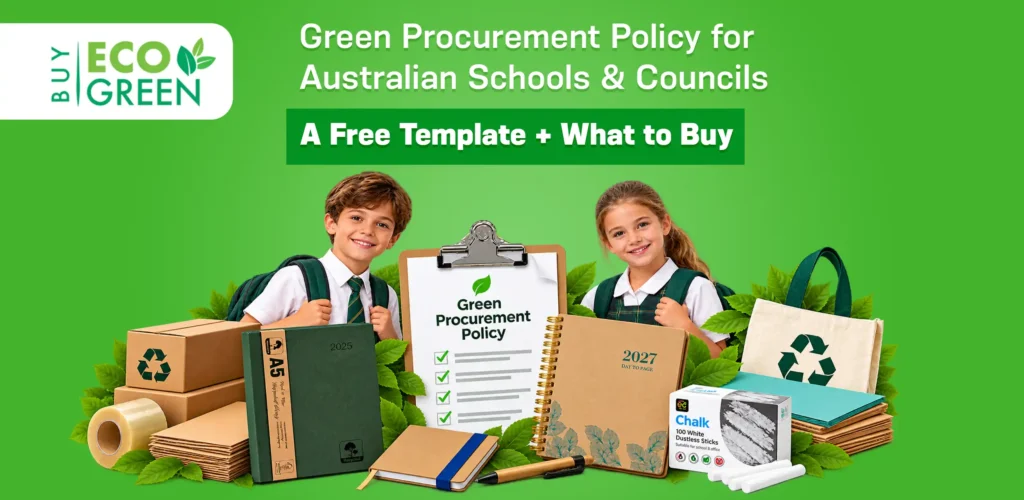
Green Procurement Policy for Australian Schools and Councils: A Free Template + What to Buy
Sustainable procurement means choosing goods and services based on their environmental and social impact across their whole life, not just their purchase price. For schools and councils, it turns everyday buying of paper, stationery, packaging and supplies into a measurable way to cut waste and meet sustainability commitments. Below is a free sustainable procurement policy template that schools, councils and community organisations can adapt, followed by a practical guide to the product categories that deliver the quickest environmental gains.
What is sustainable procurement?
Sustainable procurement weighs environmental, social and economic outcomes alongside cost and quality when buying goods and services. Green procurement, sometimes called environmental procurement, is the environmental part of that approach: preferring products with recycled content, certified sourcing, lower emissions, less packaging and a better end-of-life outcome.
In Australia, this is now part of the mainstream procurement framework. Commonwealth entities must consider environmental sustainability when assessing value for money, and the Australian Government’s Environmentally Sustainable Procurement Policy, introduced in July 2024, sets out reporting requirements for high-impact categories. Local government has its own sector resources, and state education departments set procurement rules for government schools. A school or council green procurement policy sits within these frameworks and applies their intent to everyday purchasing.
Before you start: check your existing obligations
A sustainable procurement policy has to fit the rules your organisation already works under.
Government schools: Some state education departments set a single mandatory procurement policy for all government schools. In Victoria, for example, government schools and school councils must follow the department’s procurement policy and must not develop their own local procurement policies. In that case, use the template below as an internal purchasing guideline or a section of the school’s environmental sustainability plan, sitting alongside the department policy rather than replacing it.
Councils: Councils operate under their state’s local government legislation and procurement requirements. Use the template to set environmental objectives and product criteria within your existing procurement framework.
Independent and Catholic schools, childcare centres and not-for-profits: These organisations usually have more flexibility to adopt a standalone environmental procurement policy approved by their board or governing body.
If in doubt, check with your department, council procurement team or governing body before adopting a new policy.
Free sustainable procurement policy template
Copy the template below into your own document and replace the bracketed text with your organisation’s details.
1. Purpose This policy sets out how [Organisation Name] will consider environmental and social outcomes when purchasing goods and services, to reduce waste, lower our environmental footprint and support our sustainability commitments.
2. Scope This policy applies to all staff, [school council / councillors / committee members] and volunteers who purchase goods and services on behalf of [Organisation Name]. It applies alongside [name of overarching procurement policy or legislation], which takes precedence where requirements differ.
3. Principles When purchasing, [Organisation Name] will:
Avoid unnecessary purchases and consider reuse, repair or sharing before buying new.
Prefer products with recycled content, particularly post-consumer recycled content.
Prefer products made from certified sustainable materials, such as FSC-certified paper and timber.
Prefer products that are recyclable, compostable or refillable at end of life.
Avoid single-use plastics where a suitable alternative is available.
Consider the whole-of-life cost of a product, not only its purchase price.
Consolidate orders where practical to reduce delivery trips and packaging.
4. Product criteria Where available and fit for purpose, [Organisation Name] will purchase:
Copy paper and paper products with recycled content and FSC certification.
Stationery made from recycled, renewable or certified materials, including pens, pencils, binders and folders.
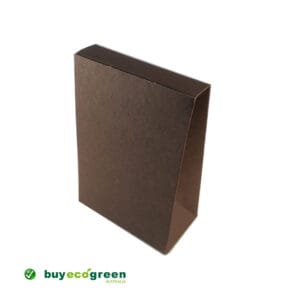
Packaging and mailing materials that are paper-based, recyclable or certified compostable.
Art and classroom materials that are non-toxic and made from recycled or low-impact materials.
Products with verifiable environmental claims, supported by certifications, stated recycled percentages or recognised standards.
5. Supplier expectations [Organisation Name] will prefer suppliers that:
Provide clear, verifiable information on the environmental credentials of their products.
Offer bulk and consolidated supply to reduce freight and packaging.
Can support reporting by providing product specifications on request.
6. Roles and responsibilities
[Business Manager / Procurement Officer] is responsible for applying this policy to purchasing decisions.
[Sustainability Officer / Green Team / Principal] is responsible for monitoring progress and promoting the policy.
All staff are responsible for following this policy when requesting or making purchases.
7. Monitoring and reporting [Organisation Name] will track the proportion of spend in key categories, such as paper and stationery, that meets the product criteria in this policy, and report progress [annually / each term] to [governing body].
8. Review This policy will be reviewed every [one / two] years, or sooner if relevant legislation or departmental policy changes.
Approved by: [Name, Role] Date approved: [Date] Next review date: [Date]
What to buy first: the quickest green procurement wins
A policy only makes a difference when it changes what lands on the loading dock. The categories below are bought in high volumes by almost every school and council, which makes them the easiest place to show measurable progress.
Recycled paper art pads, eco glue, non-toxic crayons
High turnover in classrooms and early learning
Packaging and mailing
Paper mailers, recyclable kraft tape, compostable tape certified to AS 4736
Replaces plastic tape and bubble mailers in mailrooms
Paper
Paper is usually the single biggest stationery category by volume, so switching it has the largest effect on a sustainable procurement report. Buyecogreen’s recycled copy paper is made from 100% post-consumer recycled fibre, FSC certified and chlorine-free, in A4 and A3, by the ream or in bulk cartons.
Writing and filing
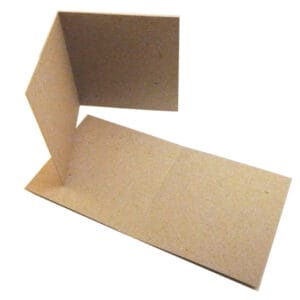
Sustainable stationery covers the items staff and students use every day. The writing and stationery range includes pens and pencils made from recycled paper, cornstarch, bamboo and FSC-certified timber, alongside PVC-free erasers and eco rulers. For filing, recycled ring binders and lever arch files are made from kraft board with no plastic cover, so the board and metal ring panel can be separated and recycled at end of life.
Classroom supplies
For schools, the exercise books and binder books range is printed on Australian-made recycled paper that is FSC-certified and carbon-neutral, in the standard A4 8mm ruled format. Eco art and craft materials cover the art room, and recycled diaries cover staff planning for the year ahead.
Mailrooms and packaging
Councils and schools that post documents, resources or parcels can replace plastic-lined mailers with recycled paper padded bags and mailers, and seal them with paper or compostable packing tape so the whole parcel stays recyclable.
How to verify environmentally friendly products
Green claims vary in quality, so a policy is only as strong as the evidence behind each product. Look for:
A stated recycled percentage, ideally post-consumer, rather than a general “made with recycled materials” label.
Recognised certifications, such as FSC for paper and timber products.
Recognised standards for compostability, such as AS 4736 for commercial composting, rather than vague terms like “eco” or “biodegradable”.
Product specifications on request, so claims can be recorded for reporting.
Buyecogreen applies a simple standard: every product in the range must meet at least two environmental criteria, and each product page lists its materials and certifications. That gives procurement teams a documented basis for every purchase.
Why consolidate with one wholesale eco supplier?
Buying wholesale eco friendly products from a single specialist supplier makes a sustainable procurement policy easier to apply and easier to report on. One supplier means fewer accounts, fewer deliveries and less packaging, and every item ordered already meets an environmental standard, so staff do not need to check each product individually. Buyecogreen, a division of long-established Australian recycled products business Ecopaper Pty Ltd, supplies eco friendly stationery and supplies in bulk to schools, councils, government departments, childcare centres and not-for-profits across Australia.
Frequently asked questions
What is sustainable procurement?
Sustainable procurement means buying goods and services based on their environmental, social and economic impact across their whole life, not just their price. It favours recycled, certified and low-waste products.
Do Australian schools need a sustainable procurement policy?
It depends on the school. Some government schools must follow a mandatory department procurement policy and cannot create their own, so they can use a purchasing guideline instead. Independent schools usually adopt their own.
What is the difference between green procurement and sustainable procurement?
Green procurement focuses on environmental impact, such as recycled content and waste. Sustainable procurement is broader and also covers social and economic outcomes, such as ethical supply chains.
What should a school or council switch first?
Start with high-volume categories such as copy paper, pens, filing and exercise books. These are bought in large quantities, so switching them delivers measurable progress quickly.
How can we verify a product is environmentally friendly?
Look for a stated recycled percentage, recognised certifications such as FSC, and recognised standards such as AS 4736 for compostability. Ask suppliers for product specifications to support reporting.
Put your policy into practice with Buyecogreen
Turn your sustainable procurement policy into everyday purchasing with recycled and certified products from one Australian supplier. To set up an account, order in bulk or request product specifications for your reporting, contact the Buyecogreen team on 1300 663 488 or email info@buyecogreen.com.au.