Raffia is one of those materials many people have seen in packaging, display work, craft supplies, and fashion accessories, but few can confidently define. For Australian schools, retailers, event teams, offices and community organisations trying to choose lower-impact materials, that definition matters. Understanding what raffia is, where it comes from, and how it performs can make sustainable purchasing easier.
At its core, raffia is a natural plant fibre taken from the leaves of the raffia palm. The material is valued for its lightweight, flexible, strong enough for tying and wrapping, and visually appealing qualities in both natural and coloured forms. Traditional raffia has long been used for weaving, cordage, packaging and decorative work, while modern buyers also use it in fashion, gift presentation and eco-conscious merchandising.
For organisations looking to reduce plastic use in presentation and packaging, raffia offers a practical alternative with a softer, more natural finish. Buyecogreen stocks both natural raffia and coloured raffia as part of its sustainable packaging and craft range, making it easier for Australian organisations to source plant-based options through a supplier that already serves schools, offices and community groups.
What is raffia?
Raffia is a natural fibre stripped from the leaves of the raffia palm. In practical terms, it is a long, flexible plant fibre that can be bundled, dyed, twisted, woven or tied depending on the intended use. Because it is plant-based rather than synthetic, raffia is often chosen for packaging, display styling, arts materials and textile applications where a more natural finish is preferred.
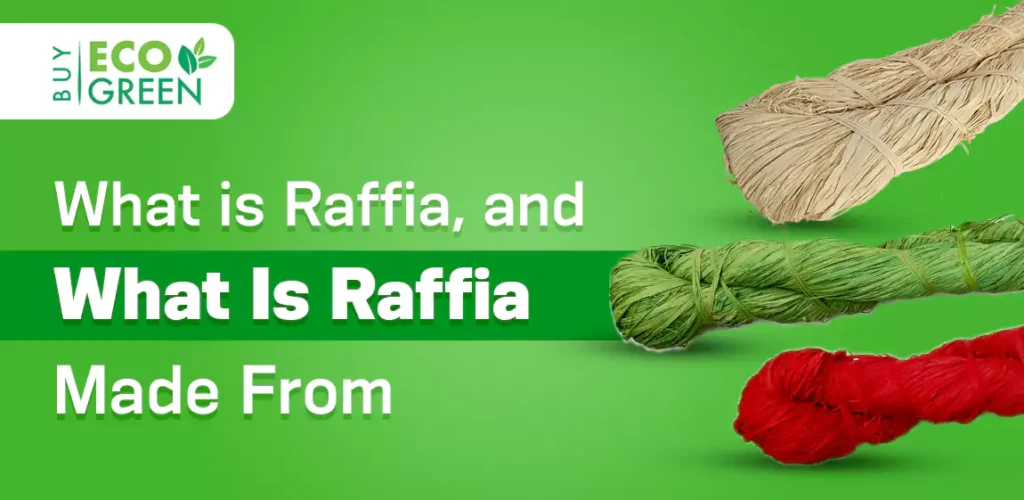
Raffia is easy to recognise. Natural raffia usually has an earthy, straw-like appearance and a soft, organic texture. Coloured raffia keeps that texture while adding visual impact for gift wrapping, merchandising, school projects and seasonal displays. On Buyecogreen, natural raffia is sold in 1kg hanks, while coloured raffia is available in multiple shades for decorative and practical use.
What is raffia made from in Australia?
Raffia used in Australia is generally made from the leaves of the raffia palm, not from a separate manufactured plastic substitute. Australian suppliers typically import natural fibres and sell them locally for packaging, craft, floristry, display, and business use. Buyecogreen describes its natural raffia as long, undyed fibres made from leaves from Madagascar and/or Africa. In contrast, its coloured raffia is dyed with natural raffia fibres.
That distinction matters because buyers sometimes assume raffia is a paper ribbon or a synthetic decorative strand. Traditional raffia is neither. It is a natural fibre with plant origin, which is one reason it remains popular in environmentally conscious packaging and display settings.
Where does raffia come from?
Raffia comes from raffia palms, especially species associated with Madagascar and parts of Africa. Helen Kaminski’s ranking article explains that raffia is derived from the leaves of the Raphia farinifera palm and notes that high-quality raffia is strongly associated with Madagascar. Botanical and plant references also link commercial raffia to tropical regions and to its longstanding use in weaving, cordage, and handicrafts.
For Australian buyers, that means the raffia sold locally is usually sourced internationally and supplied into the local market as a natural packaging, craft or fashion material. Buyecogreen’s own product information supports this, identifying its raffia as fibre from Madagascar and/or Africa.
Why raffia still matters in sustainable packaging and presentation
Raffia has remained relevant because it solves two problems at once. It performs a practical task, such as tying, wrapping, bundling or adding protective fill, and it creates a natural look that suits environmentally responsible branding.
For businesses and institutions, appearance matters. Gift packs, welcome packs, event materials, school displays and retail presentation all benefit from finishes that look considered rather than disposable. Plastic ribbons and synthetic ties can undermine an otherwise sustainable presentation. Natural raffia helps maintain an organic, low-impact appearance while remaining functional.
Buyecogreen explicitly positions plant-based raffia and twine as an alternative to plastic tape, twine or straps and connects the category to biodegradable packaging choices. That is especially relevant for organisations working on waste reduction, greener procurement or stronger sustainability messaging in customer-facing materials.
Uses of raffia in fashion
Raffia has a long association with fashion because it combines texture, flexibility and a handmade look. It is commonly woven or braided into hats, bags, footwear and trims. Helen Kaminski’s content shows how central raffia is to fashion accessories, with specific emphasis on braided raffia techniques and handcrafted production for hats, bags and footwear.
Even if Buyecogreen is not a fashion retailer, this matters for search intent. People asking “what is raffia” often want to know why the material appears so often in accessories. The answer is simple. Raffia offers a distinctive natural texture, takes dye well, and can be shaped by hand into products that feel both lightweight and durable. Those same qualities also explain why raffia works so well in decorative packaging, craft programs and visual merchandising.
Benefits of raffia material
One of the biggest benefits of raffia material is that it is natural, lightweight and versatile. It can be left undyed for a raw, earthy finish or coloured for brighter visual applications. It is also flexible enough for wrapping and tying, yet strong enough to hold shape in woven and decorative uses. Botanical and industry references consistently describe raffia as a strong, commercially useful natural fibre suited to cordage, weaving, horticulture and handicrafts.
Another benefit is aesthetic. Raffia does not look overly processed. That makes it a strong fit for brands and organisations that want packaging and presentation materials to reflect environmental values. Buyecogreen’s category copy reinforces this by pairing raffia with recycled swing tags and other eco-conscious packaging materials rather than single-use plastic-based options.
A third benefit is purchasing flexibility. Natural raffia suits neutral packaging schemes, while coloured raffia can support seasonal campaigns, school craft programs, event styling and display work. Buyecogreen offers both options, making it easier to buy raffia or buy raffia online through one supplier that already serves Australian organisations.
Natural raffia vs coloured raffia
Natural raffia is the undyed version of the fibre. It is ideal where an earthy, understated finish is preferred, especially in eco-friendly packaging, recycled paper presentations and classroom or community craft settings. Buyecogreen’s natural raffia description highlights undyed fibres and notes that it pairs well with brown wrapping paper, which fits a low-waste, natural presentation style.
Coloured raffia starts with the same plant-based material but adds dye for visual effect. This makes it useful when colour-coding, themed displays, gift presentation or bold merchandising is important. Buyecogreen’s coloured raffia range includes multiple shades and describes the product as long fibres from African leaves dyed in vibrant colours.
For procurement teams, the choice usually comes down to purpose. Natural raffia supports a quieter sustainability message. Coloured raffia supports branding, events and visual creativity without abandoning the appeal of a plant-based fibre.
When Australian organisations should choose raffia
Raffia is worth considering when an organisation wants presentation materials that look more natural than plastic alternatives. Schools can use it in classroom craft, nature-based displays and event presentation. Eco-focused retailers can use it in gift wrapping, hampers and point-of-sale styling. Offices and not-for-profits can use it for campaign packs, conference materials and branded gifting. Community groups can use it for fundraising packs and display tables.
This is where Buyecogreen’s range makes commercial sense. The business already supplies eco-friendly stationery, packaging and art materials to schools, offices and community organisations, so raffia sits naturally within a broader sustainable procurement approach rather than as a one-off decorative item.
Final thoughts
If your organisation is reviewing packaging, display or craft materials and wants an option that feels more natural and less disposable, raffia is worth a closer look. It is not a trendy word or a decorative extra. Raffia is a time-tested plant fibre with clear practical value in wrapping, tying, presentation and creative work.
For Australian buyers, the appeal is straightforward. Natural raffia supports an earthy, low-impact look. Coloured raffia adds visual energy while keeping the tactile quality of a plant-based fibre. And when sourced through a supplier such as Buyecogreen, raffia can sit within a wider purchasing strategy built around recycled, biodegradable and environmentally responsible materials.
FAQs
1. Is raffia biodegradable?
Yes, natural raffia is biodegradable because it is made from fibres taken from the leaves of the raffia palm. As a plant-based material, it can break down naturally over time when disposed of in appropriate organic conditions. This makes raffia a more environmentally responsible alternative to plastic ribbons or synthetic ties, particularly for organisations aiming to reduce landfill waste and choose packaging materials with a lower environmental impact.
2. What is the difference between natural raffia and coloured raffia?
Natural raffia refers to the undyed fibre taken directly from raffia palm leaves, giving it a straw-like appearance and organic texture. Coloured raffia begins as the same natural fibre but is dyed to produce vibrant shades used for decorative packaging, display styling and creative projects. Both versions retain the flexibility and strength of raffia natural fibres, allowing organisations to choose either a neutral eco look or a colourful presentation.
3. Is raffia strong enough for packaging and tying?
Raffia is surprisingly strong for a lightweight natural fibre. The long strands taken from raffia palm leaves provide enough durability for tying bundles, securing packaging, and decorative wrapping. While it is softer than plastic twine, it offers a reliable hold for many presentation and packaging tasks. This balance of flexibility and strength is one reason raffia continues to be widely used in packaging, craft supplies, and display work.
4. Why do businesses choose raffia for eco-friendly packaging?
Many businesses choose raffia for packaging because it offers a natural appearance while helping reduce reliance on synthetic materials. Raffia fibres come from plant leaves and can complement recycled paper wrapping, kraft packaging and sustainable display materials. For organisations focused on environmental responsibility, raffia provides a simple way to enhance packaging presentation while maintaining a natural, lower-impact aesthetic.
5. Where can you buy raffia in Australia?
Organisations in Australia can buy raffia through specialist eco-friendly suppliers that provide packaging and craft materials for schools, offices and retailers. Suppliers such as Buyecogreen offer natural raffia and coloured raffia in bulk-friendly quantities suitable for packaging, craft programs and display use. Buying raffia online from a dedicated sustainability-focused supplier also makes it easier for organisations to source environmentally responsible materials in one place.