The Ultimate Guide to Envelope Sizes (Dimensions and Uses)
If you’ve ever ordered envelopes in bulk and realised the documents inside don’t quite fit, or the flap won’t close properly because the paper has been folded too many times, you’ll understand how much a seemingly simple detail can disrupt an otherwise smooth administrative process.
For schools managing high-volume correspondence, councils distributing official communications, businesses handling regular invoicing and reporting, childcare centres sending out notices and newsletters, or not-for-profit organisations coordinating community programs, getting envelope sizes right isn’t a minor consideration. It’s a practical necessity.
This guide covers every envelope size used in Australian offices, schools, and institutions, explains the dimensions and what each size is designed to hold, and helps procurement teams and administrators make better-informed choices. It also explores how choosing recycled envelope stock supports your organisation’s broader sustainability goals without changing a single thing about how you mail.
Why Getting Envelope Sizes Right Matters for Organisations
Before getting into the sizes themselves, it’s worth understanding why this decision is worth thinking through carefully.
Ordering the wrong envelope size at scale wastes budget, creates operational delays, and often results in either overstuffed envelopes that seal poorly or documents folded more times than they should be, which affects legibility and presentation. For government communications, school reports, formal notices, or grant-related correspondence, presentation reflects on the professionalism of the organisation sending it.
Envelope size also affects postage. Australia Post applies different rates based on envelope thickness, weight, and format. Choosing the right size from the outset reduces the risk of oversized or overweight mail that attracts higher postage charges across large mail runs.
And increasingly, envelope procurement is being reviewed through the same sustainability lens as paper, packaging, and stationery. Choosing recycled envelope stock is one of the easiest, lowest-disruption improvements an organisation can make to its environmental footprint.
Understanding the Australian Envelope Sizing System
Australian envelope sizes follow the ISO 216 international standard, which is the same system used for A-series paper. The relationship between paper and envelope sizing is straightforward once you understand the logic behind it.
C-series envelopes are designed specifically to hold A-series paper. A C4 envelope holds an A4 sheet unfolded, a C5 envelope holds an A4 sheet folded once (or an A5 sheet unfolded), and a C6 envelope holds an A4 sheet folded twice (or an A6 sheet unfolded). The pattern continues down the range.
DL envelopes (short for Dimension Lengthways) are sized to hold an A4 sheet folded into thirds, making them the standard business correspondence envelope across Australia.
B-series envelopes are slightly larger than their C-series counterparts and are used when additional thickness or a tighter fit around the A-series document is required.
Square envelopes sit outside the standard ISO letter system and are used primarily for greeting cards, invitations, and event communications.
With that foundation in place, here is every size you’re likely to encounter when ordering envelopes for institutional or business use.
DL Envelope: 110mm x 220mm
The DL is the most widely used envelope in Australian business and institutional settings. Its dimensions are 110mm x 220mm, and it is designed to hold an A4 document folded into thirds lengthways.
This is the envelope your organisation most likely uses for:
- Standard correspondence and official letters
- Invoices, remittance advice, and statements
- Grant notifications and council communications
- School newsletters and parent correspondence
- Pay slips and staff communications
- Reply-paid envelopes included with outgoing mail
The DL is available with or without a window. The window version, which features a clear panel on the front, allows the recipient’s address printed on the document inside to show through without any need for separately addressed envelopes. This makes windowed DL envelopes particularly useful for high-volume administrative mail runs, where addressing each envelope individually would be impractical.
For organisations sending regular correspondence at scale, the DL is the workhorse of the envelope range. It fits standard letter trays, is compatible with most franking and stuffing equipment, and is accepted by Australia Post within standard letter dimensions.
Buyecogreen stocks DL envelopes in recycled stock, including the popular eco brown kraft finish, which signals environmental responsibility in every piece of correspondence your organisation sends.
C6 Envelope: 114mm x 162mm
The C6 measures 114mm x 162mm and holds an A4 sheet folded into quarters, an A5 sheet folded in half, or an unfolded A6 card. It is a compact envelope suited to lighter correspondence and card-based communications.
Common uses in institutional settings include:
- Greeting cards and acknowledgement cards
- Thank-you notes from schools or community organisations
- Event invitations
- Donation acknowledgement letters for not-for-profit organisations
- Short internal notices
- Smaller promotional inserts included with outgoing mail
The C6 is not suited to multi-page documents, but it is an appropriate size when the communication itself is concise and the priority is presentation over volume. For schools sending home event invitations or thank-you cards to volunteers and sponsors, the C6 offers a neater, more considered format than folding a full A4 sheet into a DL envelope.
Buyecogreen’s recycled C6 envelopes in eco brown kraft are a popular choice for schools, childcare centres, and not-for-profit organisations that want their communications to reflect their values from the outside in.
C5 Envelope: 162mm x 229mm
The C5 is sized at 162mm x 229mm and is designed to hold an A4 sheet folded in half, or an A5 sheet unfolded. It sits between the DL and C4 in terms of capacity and is particularly useful when a document needs to be sent with minimal folding.
Institutions use C5 envelopes for:
- Multi-page reports sent to parents or stakeholders
- A5 flyers and information packs
- Enrolment forms and school intake paperwork
- Marketing and information materials in A5 format
- Internal policy documents and briefing notes where presentation matters
- Certificates of participation or appreciation
One of the practical advantages of the C5 is that it reduces the number of folds required compared to a DL. For documents that will be read immediately upon opening, fewer fold lines makes the content easier to handle and review. For certificates or recognition letters, a C5 avoids the creasing of a DL fold.
C4 Envelope: 229mm x 324mm
The C4 is one of the most important envelopes for institutional settings that regularly send or receive formal documentation. At 229mm x 324mm, it holds a full A4 sheet with no folding required.
This is the envelope of choice when:
- Documents must remain flat and uncreased, such as certificates, legal correspondence, or formal grant applications
- Multiple pages are being sent together and folding is impractical
- Thicker document packs are included, such as bound reports, multi-page contracts, or assessment materials
- Submissions to government bodies, councils, or funding organisations need to arrive in pristine condition
- Annual reports or formal communications from councils and government departments are being distributed
For procurement managers and school administrators who regularly despatch formal documentation, having C4 envelopes consistently in stock prevents the temptation to fold documents into smaller envelopes in a pinch, which risks damaging professionally printed or signed materials.
The C4 is also commonly used as the outer envelope when a DL reply envelope is included inside for the recipient to use.
B4 Envelope: 250mm x 353mm
The B4 is slightly larger than the C4 at 250mm x 353mm and is used when additional clearance around an A4 document is needed, or when thicker document packs require a roomier fit.
B4 envelopes are well suited to:
- Sending multiple A4 pages together without compression
- Posting thick bound documents, booklets, or resource packs
- Mailing items that include a cover sheet, dividers, or tabbed sections
- Distributing teaching resources, training manuals, or policy documents in institutional settings
While the B4 is less commonly stocked than C4, it is the practical choice when document bulk is the key consideration rather than simply sheet size.
Square Envelopes: 105mm, 130mm, and 150mm
Square envelopes sit outside the standard letter-size system and are used specifically for cards, invitations, and occasion-based communications. They are not intended for standard correspondence and will attract different postage rates through Australia Post due to their non-standard format.
105mm square envelopes are designed for small gift cards, compliment slips, and compact greeting cards. They are commonly used by schools and community organisations when distributing small acknowledgement cards or seasonal messages.
130mm square envelopes are a versatile mid-range square format suited to standard greeting cards, thank-you cards, and event invitations. This is the most commonly ordered square size for institutional gifting and community communications.
150mm square envelopes offer a more generous format for larger greeting cards, formal invitations, and premium presentation pieces. Not-for-profit organisations and schools running fundraising events or recognition ceremonies often use this size when the quality of presentation reflects the significance of the occasion.
Buyecogreen stocks square envelopes in eco brown kraft recycled stock across all three sizes, giving organisations a sustainable option for every card-based communication in their annual calendar.
Greeting Card Size Envelopes
Beyond the numbered square sizes, greeting card envelopes are sized to accommodate the most widely sold greeting card dimensions on the Australian market. These are typically rectangular rather than square and are sized to match cards without requiring any folding or trimming.
Schools, councils, and community organisations use greeting card envelopes for:
- Seasonal cards to staff, volunteers, and community partners
- Recognition cards for students, participants, or donors
- Sympathy, congratulations, or milestone cards from workplace teams
- Fundraising and event promotion cards sent to supporters
Having the right envelope for a greeting card makes the difference between a communication that looks considered and one that looks like an afterthought. When ordered in recycled kraft stock, greeting card envelopes also carry a quiet signal about the values of the organisation sending them.
Eco Brown: What It Means and Why It Matters
Throughout Buyecogreen’s envelope range, the eco brown finish refers to envelopes made from recycled kraft paper. The natural brown colour is a result of minimal bleaching and processing, which reduces chemical inputs and energy use during manufacturing compared to standard white envelope stock.
For schools, councils, businesses, and not-for-profit organisations, choosing eco brown recycled envelopes:
Reduces demand for virgin paper. Recycled paper uses post-consumer waste fibre, reducing the volume of paper that ends up in landfill and decreasing the need for newly harvested timber.
Signals environmental values at every touchpoint. Every piece of correspondence your organisation sends is an opportunity to reinforce your sustainability commitments. An eco brown envelope does this simply and consistently, without any additional messaging required.
Supports procurement policy compliance. Many Australian government departments, councils, and education systems now operate under green procurement frameworks that require or encourage the purchase of recycled and sustainably sourced supplies. Recycled envelope stock satisfies those requirements with no operational compromise.
Contributes to waste diversion reporting. For organisations with formal waste reduction or environmental reporting obligations, consistent use of recycled stationery, including envelopes, forms part of a trackable procurement record.
Sealed and Delivered: Choosing the Right Closure Type
Envelope size is just one part of the decision. The closure type matters significantly in operational settings where staff are sealing envelopes in volume.
Gummed (moistenable) flap: The traditional closure that requires moisture to activate the adhesive. Gummed envelopes are generally the most compatible with automated inserting and franking machinery, making them the preferred choice for large mail runs processed by machine. They also tend to have a longer shelf life than self-seal varieties.
Peel and seal (self-adhesive): A protective strip covers the adhesive on the flap. Staff peel the strip and press the flap closed, with no moisture required. This is faster for manual processing and is hygienic for staff sealing individual envelopes by hand. Peel and seal closures are ideal for smaller mail runs, one-off communications, and settings where speed and ease of use for staff are priorities.
Self-seal (press and seal): Features two adhesive strips, one on the flap and one on the body of the envelope. When pressed together, they bond immediately. This closure type is convenient for quick individual mailing and is particularly popular in smaller office and school settings.
For organisations choosing between closure types, the volume and method of processing is the deciding factor. High-volume automated mail runs generally favour gummed envelopes, while manual sealing environments benefit from peel-and-seal or self-seal options that are faster and more comfortable for staff to use at scale.
Windowed vs. Plain Envelopes: Which Does Your Organisation Need?
Plain envelopes require an address label or direct printing on the envelope for recipient details. They are appropriate when correspondence is personalised with hand-addressing, when a printer is used directly on the envelope, or when the nature of the correspondence is general rather than individually directed.
Windowed envelopes feature a clear cut-out panel, typically on the lower left front of the envelope, which allows the recipient’s address printed on the enclosed document to show through. This eliminates the need for separately addressed envelopes and is particularly valuable in:
- Accounts payable and invoice processing
- Council rate notices and government correspondence
- Bulk mail campaigns where documents are printed and folded in matched pairs
- Payroll and remittance processing
Windowed envelopes require careful attention to document layout. The address block on the letter or document inside must align with the window precisely, so it’s worth testing positioning before committing to a large bulk order.
A Quick Reference: Buyecogreen Envelope Sizes at a Glance
| Envelope Size | Dimensions | Best For |
| DL | 110 x 220mm | Standard business letters, A4 folded in thirds |
| C6 | 114 x 162mm | Cards, invitations, A4 folded in quarters |
| C5 | 162 x 229mm | Reports, A4 folded in half, A5 documents |
| C4 | 229 x 324mm | Unfolded A4, formal documents, certificates |
| B4 | 250 x 353mm | Thick document packs, bulky materials |
| 105mm Square | 105 x 105mm | Small gift cards, compliment slips |
| 130mm Square | 130 x 130mm | Standard greeting cards, event invitations |
| 150mm Square | 150 x 150mm | Larger greeting cards, formal invitations |
| Greeting Card Size | Varies | Standard retail greeting card dimensions |
Tips for Ordering Envelopes in Bulk for Institutional Use
Organisations ordering envelopes in volume benefit from a small amount of planning that prevents common errors and ensures consistent supply.
Audit your current use before you order. Identify which envelope sizes your team uses most frequently and in what volumes. Often, organisations are using two or three sizes regularly and ordering smaller quantities reactively. Consolidating to a managed bulk order reduces per-unit cost and ensures stock is always available.
Store envelopes correctly. Envelopes, particularly those with self-seal or peel-and-seal closures, need to be stored in a dry, climate-controlled environment. Humidity and heat can compromise adhesive quality over time, particularly for self-seal varieties. Gummed envelopes are more tolerant of storage conditions over longer periods.
Test document alignment before a large run. If you’re using windowed envelopes with printed documents, run a small test batch to confirm address block alignment before processing a full mailing. This is a simple step that avoids a costly reprinting or re-mailing exercise.
Factor in Australia Post requirements. Check your envelope dimensions and weights against current Australia Post letter and large letter specifications before ordering. Envelopes that fall outside the standard letter dimensions, including square envelopes, are typically charged at the large letter rate or higher.
Choose recycled stock as standard. For most institutional mail, recycled kraft envelope stock performs identically to white virgin paper envelopes. There is no operational compromise in making the switch, and it immediately improves your organisation’s procurement footprint.
Choosing Buyecogreen for Your Envelope Supply
Buyecogreen supplies recycled envelopes across the full range of sizes used by Australian schools, councils, government organisations, childcare centres, businesses, and not-for-profit organisations. Our envelope range includes DL, C4, C5, C6, greeting card size, and square formats in 105mm, 130mm, and 150mm, all available in eco brown recycled kraft stock.
Every envelope in our range is selected to meet the practical demands of institutional and business use while supporting your organisation’s commitment to responsible purchasing. Ordering through Buyecogreen means your stationery procurement contributes directly to reducing landfill waste, supporting recycled paper production, and building a consistent green procurement record across your operations.
If you’d like to discuss your organisation’s envelope requirements, confirm which sizes suit your current documentation, or explore our broader range of eco-friendly office and school supplies, our team is ready to help.
Buyecogreen supplies eco-friendly, recycled, and sustainably sourced stationery and office supplies to schools, councils, government organisations, businesses, and community groups across Australia. Explore our full recycled envelope range and sustainable stationery collection at buyecogreen.com.au
Frequently Asked Questions
Q1. What is the most commonly used envelope size for Australian schools and government organisations?
The DL envelope (110mm x 220mm) is by far the most frequently used size across Australian schools, councils, and government departments. It holds a standard A4 document folded into thirds, which covers the vast majority of everyday administrative correspondence including letters to parents, official notices, invoices, and internal communications. If your organisation is standardising its envelope procurement and needs a single size to carry the bulk of your mailing workload, the DL is the logical starting point. Buyecogreen stocks DL envelopes in recycled eco brown kraft, making it straightforward to meet both your operational and sustainability requirements in one order.
Q2. Do recycled kraft envelopes perform as well as standard white envelopes for everyday office and school use?
Yes, in virtually every practical respect. Recycled kraft envelopes offer the same structural integrity, seal reliability, and postal compatibility as standard white envelopes. They run through standard office printers when printing directly onto the envelope, seal cleanly whether gummed or peel-and-seal, and are fully accepted by Australia Post across all standard letter and large letter formats. The eco brown finish is a result of reduced bleaching during the manufacturing process, which actually reflects less chemical processing rather than lower quality. For organisations that have hesitated to switch to recycled envelope stock out of concern for performance, the transition is typically seamless. The difference shows up in your procurement reporting and environmental footprint, not in your day-to-day mailing operations.
Q3. When should our organisation choose a C4 envelope instead of a DL or C5?
Choose a C4 envelope (229mm x 324mm) whenever your document needs to arrive flat and uncreased. The most common situations where this applies include sending certificates, signed agreements, legal correspondence, formal reports, or any printed material where fold lines would affect readability or presentation. Schools sending home academic certificates or award letters, councils distributing formal notices that include printed diagrams or maps, and not-for-profit organisations posting grant-related documentation are among the most frequent users of C4 in institutional settings. A general rule of thumb is this: if folding the document would compromise either its appearance or its content, reach for a C4.
Q4. Are square envelopes compatible with standard Australia Post postage rates?
Square envelopes do not fall within Australia Post’s standard letter dimensions, which means they are typically assessed at the large letter rate rather than the standard letter rate. This is worth factoring into your budget when planning mail runs that use 105mm, 130mm, or 150mm square envelopes. For low-volume, occasion-based communications such as greeting cards, event invitations, recognition cards, or seasonal messages to staff and community partners, the postage difference is generally a minor consideration relative to the presentation value of the format. However, for bulk mailings, it is worth checking current Australia Post rate schedules before committing to a large order of square envelopes, to ensure postage costs are accounted for in your planning.
Q5. How should our organisation store bulk envelope orders to protect adhesive quality?
Proper storage is particularly important for peel-and-seal and self-seal envelopes, as their pressure-sensitive adhesives can degrade if exposed to humidity, heat, or moisture over time. The best practice is to store bulk envelope stock in a dry, temperature-stable environment away from direct sunlight, heating vents, and any areas prone to moisture. Keeping envelopes in their original packaging until needed also helps protect the adhesive strips. Gummed (moistenable) envelopes are generally more tolerant of longer storage periods and variable conditions, which is one reason they remain the preferred choice for organisations buying in high volume and storing stock for extended periods. If your organisation is ordering six to twelve months of supply at once, gummed envelopes offer more flexibility in storage without risk to adhesive performance.
Top Products
-
-
-
Eco White 300gsm card folded size 140 x 140mm (Pack of 50)
$27.95 (incl. tax)
$25.41 (excl. tax) Add to cart -
-
-
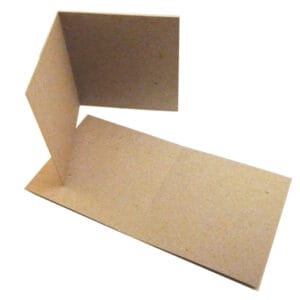
Eco Brown Recycled Square Card for folding to 100mm x 100mm (Pack of 50)
$14.95 (incl. tax)
$13.59 (excl. tax) Add to cart -
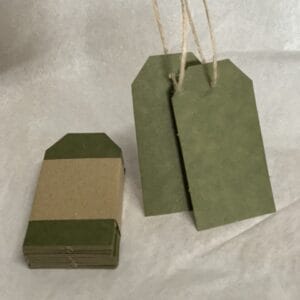
Recycled Swing Tags 40mm x 77mm (pack of 40). Colour – Olive and natural eco-brown.
$6.82 (incl. tax)
$6.20 (excl. tax) Add to cart