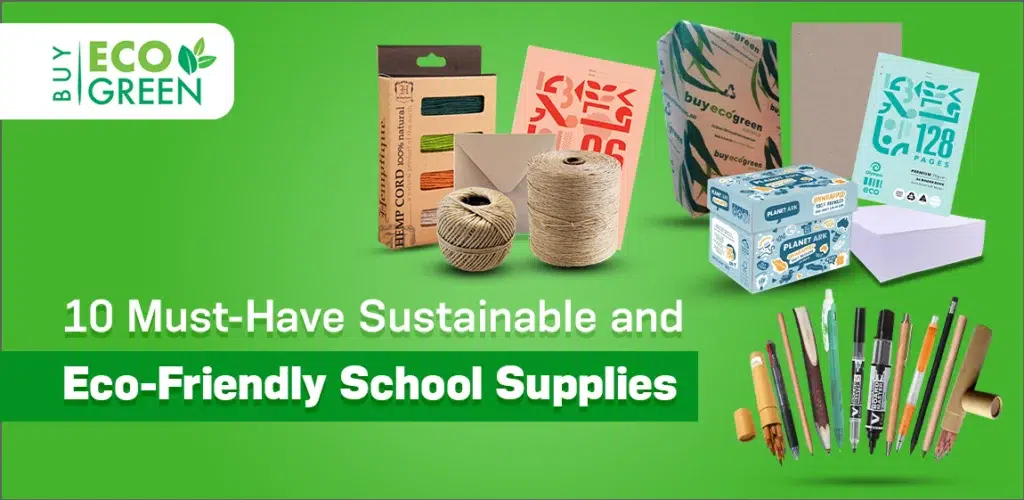
Choosing school supplies is no longer just about ticking items off a list. For many Australian families, it is about making better choices that reduce waste, limit plastic use, and support healthier learning spaces. Sustainable and eco-friendly school supplies are designed to last longer, use safer materials, and lower the environmental impact linked to everyday classroom essentials.
This guide brings together practical advice, real product considerations, and clear explanations to help parents, teachers, and students make informed choices. It also reflects what is currently working for high-ranking content, while adding local relevance and deeper buying guidance for Australia.
Why sustainable school supplies matter in Australia
Traditional school supplies rely heavily on single-use plastics, synthetic dyes, and short product lifecycles. Each year, tonnes of plastic pens, broken rulers, and disposable notebooks end up in landfill.
Sustainable school supplies focus on:
- Reduced plastic and packaging waste
- Renewable or recycled materials
- Safer, non-toxic components for children
- Long-term value rather than short-term convenience
For families shopping through Buyecogreen, this means products that align with everyday school needs while supporting responsible consumption across Australian households.
What are school supplies you need?
School supplies are the everyday tools students use to learn, organise work, and participate in classroom activities. At a minimum, most students need writing tools, paper products, storage items, and basic stationery such as rulers and erasers. The exact list varies by age and school, but the purpose stays the same: supporting learning without distraction or waste.
From a sustainability perspective, the essentials remain unchanged, but the materials and design improve. Eco-friendly school supplies replace disposable plastics with recycled, refillable, or biodegradable alternatives, helping students meet classroom needs while reducing environmental impact over the school year.
1. Recycled paper notebooks and exercise books
Paper products are used daily, making them one of the most important areas to improve sustainability.
Recycled notebooks are made from post-consumer waste paper and use significantly less water and energy during production. Look for options that are chlorine-free and printed with soy-based inks. These notebooks perform just as well as standard exercise books but carry a much smaller environmental footprint.
Why they matter:
- Reduce demand for virgin paper
- Support closed-loop recycling systems
- Suitable for all year levels
For Australian schools, recycled notebooks are widely accepted and meet standard classroom requirements.
2. Refillable pens and mechanical pencils
Single-use pens are among the most common items found in landfill. Refillable pens and mechanical pencils solve this problem by keeping the outer body in use for years.
High-quality refillable pens often write more smoothly and feel sturdier than disposable versions. Mechanical pencils eliminate the need for sharpening and reduce wood waste entirely.
Benefits for students:
- Fewer replacements during the year
- Lower long-term cost
- Less classroom waste
This category plays a major role in plastic-free school supplies, especially when paired with metal or recycled plastic barrels.
3. Wooden pencils from responsibly sourced timber
When traditional pencils are required, wooden pencils made from FSC-certified timber are the better choice. These pencils come from responsibly managed forests and avoid mixed plastics often found in novelty designs.
Natural wood pencils are:
- Fully biodegradable
- Easy to recycle or compost
- Free from unnecessary coatings
They remain a staple of eco-friendly school supplies for kids, especially in early learning environments.
4. Non-toxic highlighters and markers
Markers and highlighters are often overlooked in sustainability discussions, yet many contain solvents and chemicals that are unnecessary for classroom use.
Eco-friendly options use water-based inks, low-odour formulas, and safer pigments. Some brands also offer refillable marker systems, which significantly cut plastic waste.
Why this matters in classrooms:
- Safer for younger children
- Improved indoor air quality
- Reduced disposal of dried-out markers
Sustainable stationery for students should always prioritise non-toxic materials, particularly for daily-use items.
5. Plastic-free rulers and geometry sets
Rulers, protractors, and set squares are traditionally made from brittle plastic that cracks easily. Sustainable alternatives are made from stainless steel, bamboo, or recycled aluminium.
Advantages include:
- Greater durability
- Clear measurement markings that last
- No microplastic shedding
For older students, metal geometry tools often last through multiple school years, making them a smart investment.
6. Reusable pencil cases made from recycled fabrics
Fabric pencil cases made from recycled PET bottles or organic cotton reduce reliance on virgin plastics while offering better durability.
Look for pencil cases that:
- Use strong zips and stitching
- Can be machine washed
- Avoid PVC linings
These products fit well into sustainable classroom supplies, particularly when paired with refillable stationery.
7. Natural rubber erasers
Many erasers contain synthetic rubber and plastic fillers. Natural rubber erasers, made from latex, work just as effectively without synthetic additives.
Key benefits:
- Biodegradable materials
- Minimal residue on paper
- Safer composition for children
They are a small change that adds up when multiplied across a full school supply list.
8. Recycled or bamboo lunchbox stationery items
Items like bookmarks, desk organisers, and small storage trays often contain hidden plastics. Bamboo and recycled cardboard alternatives provide the same functionality without the waste.
These items are ideal for:
- Classroom desks
- Homework stations at home
- Teacher supply organisation
They also help reinforce sustainability habits beyond writing tools alone.
9. Eco-friendly glue sticks and adhesives
Standard glue sticks often use petroleum-based plastics and synthetic adhesives. Eco-friendly versions use plant-based glues and recyclable or cardboard packaging.
Why they are worth choosing:
- Safe for children’s skin
- Lower environmental impact
- Comparable bonding strength
Sustainable school supplies Australia wide increasingly include these products as schools update supply guidelines.
10. Reusable folders and document wallets
Instead of single-year plastic sleeves, reusable folders made from recycled polypropylene or cardboard composites last far longer.
They help students:
- Keep work organised
- Reduce paper loss
- Avoid replacing folders each term
For families seeking affordable sustainable school supplies, durability plays a key role in long-term savings.
How to choose affordable sustainable school supplies
Sustainable does not always mean expensive. The key is focusing on lifespan rather than upfront price.
Practical tips:
- Prioritise refillable items over disposables
- Choose neutral designs that last multiple years
- Buy fewer, higher-quality tools
- Reuse items from previous school years
Retailers like Buyecogreen focus on products that balance cost, durability, and environmental responsibility, making sustainable options more accessible to Australian families.
Common mistakes to avoid when buying eco-friendly supplies
- Choosing novelty eco items with poor durability
- Overbuying supplies that are rarely used
- Ignoring refill availability
- Focusing only on labels rather than materials
True sustainability combines responsible materials with everyday practicality.
Supporting sustainability habits in students
Eco-friendly school supplies are most effective when paired with education. Encourage students to:
- Refill rather than replace
- Care for items properly
- Understand why material choices matter
These habits often extend into other areas of daily life, reinforcing environmental awareness beyond the classroom.
Why Buyecogreen focuses on sustainable school supplies
Buyecogreen curates products that meet real classroom needs while reducing unnecessary waste. The focus is on:
- Practical sustainability
- Long-term usability
- Materials suited to Australian conditions
This approach supports families looking for reliable eco-friendly school supplies for kids without compromising on quality or affordability.
Final thoughts
Sustainable school supplies are no longer a niche choice. They are practical, widely available, and often better made than conventional alternatives. By choosing recycled paper, refillable stationery, and plastic-free tools, families can reduce waste while supporting healthier learning environments.
Each small change adds up over a school year, making a measurable difference for both students and the planet.
FAQ
Are eco-friendly school supplies really better for the environment?
Yes, eco-friendly school supplies reduce environmental harm by using recycled, renewable, or biodegradable materials instead of single-use plastics. Products like recycled paper notebooks, refillable pens, and wooden pencils help cut landfill waste and lower resource consumption. Over a school year, these choices significantly reduce plastic disposal and support more responsible manufacturing practices, especially when supplies are reused rather than replaced.
What stationery can be reused instead of thrown away?
Many everyday stationery items can be reused rather than discarded. Refillable pens, mechanical pencils, durable rulers, reusable folders, and fabric pencil cases are all designed for long-term use. Choosing reusable stationery reduces waste, saves money over time, and helps students develop better habits by maintaining and refilling supplies instead of constantly replacing them.
Is plastic-free school stationery practical for students?
Plastic-free school stationery is practical for most students and works well in everyday classroom settings. Items made from wood, metal, paper, or bamboo perform the same function as plastic versions while offering greater durability. Metal rulers, wooden pencils, and cardboard folders often last longer, making plastic-free supplies a reliable and realistic option for school use.
How do sustainable school supplies support children’s health?
Sustainable school supplies often use non-toxic, water-based, or natural materials that reduce exposure to harsh chemicals. This is especially important for younger children who frequently handle stationery. Using safer inks, natural rubber erasers, and chemical-free glues helps improve indoor air quality and creates a healthier learning environment at school and at home.
Can sustainable school supplies be used for multiple school years?
Yes, many sustainable school supplies are designed to last across multiple school years. Refillable pens, sturdy pencil cases, metal rulers, and reusable folders hold up better than disposable alternatives. By choosing durable items, families reduce waste and avoid buying the same supplies every year, making sustainability both practical and cost-effective.
What should parents look for when buying sustainable school supplies?
Parents should look for refillable designs, recycled or renewable materials, and simple construction without unnecessary plastic. Durability matters more than appearance, especially for items used daily. Choosing well-made sustainable school supplies helps reduce waste, supports responsible consumption, and ensures children have reliable tools throughout the school year.
Are sustainable school supplies accepted by Australian schools?
Yes, sustainable school supplies are widely accepted by Australian schools as long as they meet basic classroom requirements. Recycled notebooks, refillable pens, wooden pencils, and metal rulers function the same as conventional supplies. Many schools actively encourage environmentally responsible choices as part of broader sustainability education programs.