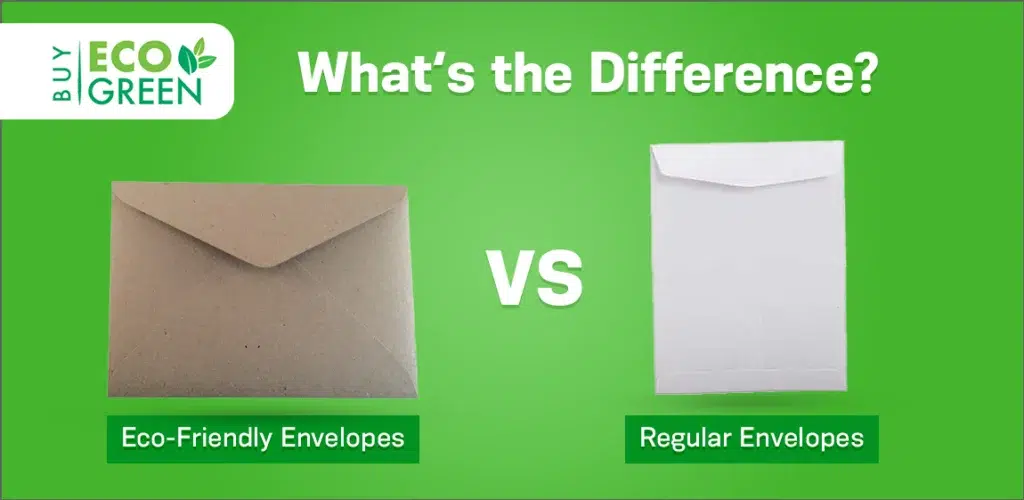
Eco‑Friendly Envelopes vs Regular Envelopes: What’s the Difference
Modern schools and offices rely on envelopes every day: sending invoices, mailing exam results or simply keeping documents tidy. Each of those envelopes has an environmental footprint. Choosing eco‑friendly envelopes instead of conventional ones can significantly reduce waste and resource use. This guide explains howeco‑friendly envelopes differ from regular envelopes, why the difference matters for Australian schools and offices and how to make an informed choice.
Materials and Manufacturing
What goes into a regular envelope?
Regular envelopes are typically manufactured from virgin wood pulp. Virgin fibre paper uses large amounts of trees, energy and water and produces considerable waste and pollution. A comparison by the Environmental Paper Network shows that producing one tonne of virgin‑fibre paper consumes about 24 trees and 33 million BTUs of energy and releases 5600 pounds of CO₂‐equivalent greenhouse gases, whereas recycled paper avoids all tree cutting and reduces energy use and pollution. MIT’s recycling facts page adds that recycling one tonne of paper instead of using virgin pulp saves 17 trees, 7 000 gallons of water, 4 200 kWh of energy and prevents 60 pounds of air pollutants.
Conventional envelopes often undergo chlorine bleaching to achieve a bright white finish. This process generates chlorinated by‑products that are toxic to ecosystems. The adhesives used to seal regular envelopes are usually solvent‑based; according to adhesive manufacturer H.B. Fuller, solvent‑based adhesives release emissions and require significant energy to remove the solvents.
Eco‑friendly envelope construction
Eco‑friendly envelopes are designed to minimise environmental impact. Key differences include:
Recycled or sustainably sourced paper – Many green envelopes use 100 % recycled fibres, some of which are post‑consumer waste. For example, recycled brown “kraft” envelopes are often made entirely from recycled paper with around 20 % post‑consumer waste. Using recycled fibres conserves trees, water and energy and avoids the energy‑intensive bleaching process.
Chlorine‑free and low‑impact bleaching – Where a white or coloured finish is needed, eco‑envelopes are bleached using elemental chlorine‑free (ECF) or process chlorine‑free (PCF) methods. These processes reduce dioxin formation compared with conventional chlorine bleaching.
Eco‑sensitive adhesives – Instead of solvent‑based glues, eco‑friendly envelopes use water‑based or solvent‑free adhesives. H.B. Fuller notes that water‑based adhesives are durable and have lower emissions, and solvent‑free adhesives formulated from bio‑based materials are even more sustainable because they require less energy and release fewer emissions. Some envelopes use plant‑based glues that are compostable.
Vegetable‑based inks – When printing is required, many eco‑friendly manufacturers choose vegetable‑ or soy‑based inks. These inks release fewer volatile organic compounds (VOCs) during printing and are easier to de‑ink during recycling (which improves fibre recovery). While research is ongoing, this practice complements other sustainability measures.
Compostable or paper windows – Where a window is needed, eco‑friendly options use cellulose (plant‑based) film or paper instead of plastic. This makes the envelope fully recyclable or compostable.
Kraft paper envelopes
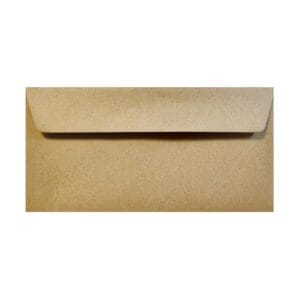
“Kraft” refers to the unbleached brown paper commonly used for mailing. Kraft envelopes are durable and have a natural aesthetic that appeals to environmentally conscious businesses. Twigs Paper explains that recycled brown kraft envelopes are made from 100 % recycled content with 20 % post‑consumer waste. Because they avoid bleaching and include significant post‑consumer fibre, kraft envelopes have a lower carbon footprint and are often biodegradable.
Resource Use and Environmental Impact
The biggest environmental difference between eco‑friendly and regular envelopes lies in resource consumption.
Factor
Regular envelopes
Eco‑friendly envelopes
Raw materials
Virgin pulp from trees; chlorine bleaching; solvent‑based adhesives
Recycled paper or responsibly sourced paper (e.g. FSC‑certified); chlorine‑free processing; water‑based or solvent‑free adhesives
Resource use per tonne
Uses ~24 trees and 33 million BTUs energy; emits 5 600 lb CO₂‑eq
0 trees; 22 million BTUs energy; reduces greenhouse gas emissions by ~37 %
Water & energy savings
Producing new paper consumes large volumes of water and energy
Recycling paper saves 7 000 gallons of water and 4 200 kWh of energy per tonne
Air and water pollution
Conventional bleaching and solvents produce chlorinated by‑products and VOCs
Recycled paper production creates 74 % less air pollution and 35 % less water pollution; solvent‑free adhesives release fewer emissions
End‑of‑life
Some envelopes have plastic windows or mixed materials that complicate recycling; padded mailers often end up in landfill
Designed for recyclability or compostability; recycled paper decomposes more cleanly and avoids methane emissions
Recyclability and Disposal
Mail with plastic windows
Consumers often wonder whether envelopes with plastic windows can be recycled. The U.S. EPA states that even envelopes with plastic windows can be recycled. The key is that specialised recycling centres remove the window films and adhesives. An article from All Colour Envelopes explains that council recycling centres use machinery to melt adhesives and separate plastic windows so that the paper fibres can be recycled without contamination.
Energy and resource benefits of recycling
Recycling paper conserves natural resources and reduces pollution. Shred‑it UK’s study (summarised by All Colour Envelopes) notes that recycling paper uses 70 % less energy and water than producing new paper and that recycling one tonne of paper saves over 17 trees. MIT’s recycling facts further highlight that recycling prevents air pollution and reduces energy use.
Methane emissions and biodegradability
When paper decomposes in landfills it produces methane, a greenhouse gas 25 times more potent than CO₂. Using recycled and compostable envelopes reduces waste sent to landfill and therefore helps cut methane emissions. Many kraft and are biodegradable, breaking down naturally without harming the environment.
Adhesives, Windows and Finishing Touches
Adhesives and window materials influence both performance and environmental impact:
Solvent‑based vs water‑based adhesives – Solvent‑based adhesives provide strong bonds but are flammable and release emissions; they also require significant energy to remove solvents. Water‑based and solvent‑free adhesives are more environmentally friendly, offering high durability and faster application speeds.
Window films – Traditional plastic windows can interfere with recycling unless removed. Modern eco‑envelopes either avoid windows altogether or use paper or cellulose film that can be recycled or composted.
Self‑seal strips – Many eco‑friendly envelopes feature peel‑and‑seal closures using pressure‑sensitive adhesives that are latex‑ or plant‑based, avoiding hot‑melt glues that contain petroleum derivatives.
Cost, Quality and Performance
There is a perception that green stationery products are more expensive or less durable. While eco‑friendly envelopes sometimes cost a little more due to smaller production runs or certification fees, the price gap is narrowing as demand grows. Recycled kraft envelopes are thick and durable and often have a rustic appearance that enhances brand identity. Twigs Paper emphasises that their recycled brown envelopes are high‑quality, biodegradable and suitable for a wide range of uses. The adhesives used in eco‑friendly envelopes meet the same performance standards as those in regular envelopes, so there is no need to sacrifice reliability.
Why Choose Eco‑Friendly Envelopes?
Reduce resource consumption. Switching from virgin to recycled paper saves trees, water, energy and reduces greenhouse gas emissions.
Lower pollution. Recycling generates far less air and water pollution and avoids chlorine‑based bleaching.
Support circular economy. Eco‑friendly envelopes close the loop by using recycled content and being fully recyclable or compostable.
Comply with procurement policies. Many Australian schools and government bodies have sustainability procurement guidelines that prioritise recycled paper and FSC‑certified products.
Enhance corporate responsibility. Choosing eco‑friendly stationery demonstrates environmental stewardship, which resonates with students, parents and business partners.
Choosing the Right Envelope for Your Needs
Here are some tips to help Australian schools and offices select the best envelope:
Identify the purpose. For general mailings or invoices, choose recycled white or brown envelopes with a peel‑and‑seal closure. For high‑impact communications such as certificates, select heavier recycled cardstock or premium FSC‑certified envelopes.
Consider window requirements. Where possible, use windowless envelopes to simplify recycling. If a window is essential, choose envelopes with paper or cellulose windows. Councils can recycle plastic windows, but removing them makes the process more efficient.
Look for certifications. Products labelled as FSC‑certified, carbon‑neutral or compostable give assurance that environmental standards have been met.
Buy from reputable suppliers. Companies like Buyecogreen specialise in eco‑friendly office supplies. Their range includes recycled kraft envelopes, chlorine‑free white envelopes, padded mailers made from recycled paper and even compostable packaging. Purchasing from a specialist ensures product transparency and helps build demand for sustainable stationery.
Conclusion
Shifting from conventional envelopes to eco‑friendly alternatives is an easy yet meaningful way to reduce resource use and pollution. Recycled and sustainably sourced envelopes conserve trees, save water and energy, produce less pollution and close the loop in paper manufacturing. They are also durable, cost‑competitive and compatible with modern recycling systems. For Australian schools and offices committed to reducing their environmental impact, eco‑friendly envelopes from trusted suppliers like Buyecogreen offer a practical solution that aligns with your sustainability goals.
Frequently Asked Questions
1. What makes an envelope “eco‑friendly”?
Eco‑friendly envelopes are made from recycled or sustainably sourced paper, use chlorine‑free bleaching if whiteness is required, employ water‑based or solvent‑free adhesives and avoid plastic window films. By using recycled fibres, they reduce resource consumption and pollution.
2. Are envelopes with plastic windows recyclable?
Yes. The U.S. EPA notes that even envelopes with plastic windows can be recycled. Specialist recycling centres remove the plastic windows and adhesives so that the paper fibres can be recovered. However, choosing paper or cellulose windows or avoiding windows altogether makes recycling simpler.
3. How does using recycled envelopes help the environment?
Using recycled envelopes conserves trees, water and energy. Producing paper from recycled pulp saves 17 trees, 7 000 gallons of water and 4 200 kWh of energy per tonne, and it reduces greenhouse gas emissions and pollution. Recycled brown envelopes also divert paper from landfill and help reduce methane emissions.
4. Do eco‑friendly envelopes cost more than regular envelopes?
Eco‑friendly envelopes can be slightly more expensive due to certification and smaller production runs. However, the price difference is narrowing as demand increases. The long‑term environmental benefits—saving resources and supporting recycling infrastructure—often outweigh the marginal cost. Buying in bulk from specialists like Buyecogreen can further reduce costs.
5. Are eco‑friendly envelopes as durable as conventional ones?
Yes. Recycled kraft envelopes are thick and strong, and modern water‑based adhesives provide secure seals. Twigs Paper notes that their recycled envelopes are durable and high quality, proving that sustainability does not compromise performance.
6. What should I do with padded or bubble mailers?
Padded mailers made from mixed materials (paper laminated to plastic bubbles) are difficult to recycle and generally go to landfill. Look for padded mailers made entirely from recycled paper or compostable materials. Buyecogreen stocks paper‑padded mailers that can be recycled in the paper stream. If you have a plastic‐bubble mailer, reuse it or check with your local supermarket for soft plastic recycling programmes.
7. How can schools and offices encourage sustainable mailing practices?
Establish procurement policies that prioritise recycled and certified paper products, educate staff about recycling guidelines and provide separate bins for paper products. Encourage electronic communication when possible and reuse envelopes internally. By making eco‑friendly envelopes the default option, your organisation can reduce its environmental footprint and model sustainability for students and staff.