Choosing the right cellophane gift bag size sounds simple until you are placing a bulk order for a whole school, council event or office gifting program. Order too small and the contents get crushed. Order too large, and your presentation looks loose, and the bag is harder to seal. This guide walks procurement officers, teachers and administrators through how to match bag size and format to the job, using Buyecogreen’s range of genuine, plant-based cellophane.
Before sizing, one point matters for any organisation buying on environmental grounds. Most clear bags sold in Australia as cellophane are actually BOPP, a petroleum-based plastic that does not biodegrade and cannot go in kerbside recycling. Buyecogreen stocks real cellulose cellophane, made from plant fibres and biodegradable like paper. A quick check tells them apart: genuine cellophane tears cleanly by hand, while plastic film stretches and resists tearing. Everything in our cellophane bags and sheets range is the real thing.
Start with the item, not the bag
The size you need is driven by three things: the dimensions of what you are packaging, its shape, and how it will be sealed or displayed. A good working rule is to allow a small amount of room around the item, usually half a centimetre to one centimetre, so the bag is easy to fill, fold and tie without straining. Flat items want a snug fit. Bulkier or rounded items need a format that gives them room to sit upright.
Get those three factors right, and the rest of the decision becomes straightforward.
Flat bags for cards, prints and slim items
Flat cellophane bags are the standard choice for greeting cards, art prints, postcards, stationery, biscuits and other slim contents. They have a simple open top that can be folded, tied or sealed with biodegradable tape.
For greeting cards, two sizes cover most needs. The C6 bag at 190 x 120mm suits C6 envelopes and cards, while the slightly more generous GCard bag at 200 x 135mm fits standard greeting card formats with a little breathing room. Schools sleeving student artwork, eco-focused retailers presenting cards and offices preparing printed materials tend to standardise on one of these two. The flat range runs from compact 100 x 180mm bags up to A4+ sizes at 330 x 230mm for larger prints and documents.
Gusseted bags for items with height or bulk
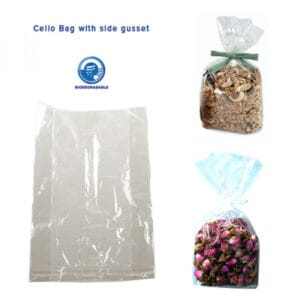
When contents have depth, a flat bag will not sit well. Gusseted bags have an expandable base that lets the bag stand upright and hold shape, which makes them suited to baked goods, potted seedlings, small hampers, candles and gift sets. The gusseted bag at 180 x 100mm with a 50mm side gusset is a reliable starting point for small bulky items, and is also available in a box of 1000 for high-volume use.
When you size a gusseted bag, account for both the base width and the finished height of the item, plus a little extra at the top for closing.
Sheets for wrapping, hampers and classroom art
Some jobs are not bag jobs. For wrapping hampers, large gifts or display pieces, clear cellophane sheets handle the work that no standard bag size can. For art rooms and presentation projects, coloured cellophane sheets in packs of 25 give schools and childcare centres a generously sized, plant-based option for colour theory, light play and craft activities.
Matching pack size to your organisation
Size is only half the procurement decision. Quantity is the other half. Buyecogreen supplies bags in packs of 100 for smaller teams, single classrooms and occasional use, and in boxes of 1000 for schools, councils and operations that go through clear packaging at volume. The GCard box of 1000 is a common choice for organisations standardising a single card-sleeving size across multiple sites. Buying by the box keeps unit handling simple and supplies dependable across a school year or event calendar.
A simple way to choose
If you are sleeving cards or slim prints, go flat and match the format size. If contents have height or bulk, go gusseted and size by base plus height. If you are wrapping something large or running a craft activity, reach for sheets. Then pick a pack of 100 or a box of 1000 based on how much your organisation gets through. Pairing your bags with tissue paper for padding and natural twine or ribbon for finishing rounds out a complete, plastic-free presentation from one supplier.
Frequently asked questions
What size cellophane bag fits a standard greeting card?
A C6 bag at 190 x 120mm suits C6 cards and envelopes, while a GCard bag at 200 x 135mm gives standard cards a little more room. Both are stocked in packs of 100 and boxes of 1000.
Should I choose a flat or gusseted bag?
Use flat bags for slim items like cards, prints and biscuits. Choose gusseted bags when contents have height or bulk and need to stand upright, such as baked goods or small hampers.
How much extra room should I allow around the item?
Allow roughly half a centimetre to one centimetre around the contents. That makes the bag easy to fill, fold and seal without crushing the item or leaving it loose inside.
Are these bags genuinely biodegradable?
Yes. Buyecogreen stocks real cellulose cellophane made from plant fibres, not BOPP plastic. It biodegrades like paper and tears cleanly by hand, unlike plastic film that stretches.
Can I order in bulk for a school or council?
Yes. Bags come in packs of 100 and boxes of 1000 for high-volume institutional use. For help matching sizes and quantities to a large order, call 1300 663 488 or email info@buyecogreen.com.au.
Order sustainable cellophane gift bags in bulk
Buyecogreen supplies genuine, plant-based cellophane bags and sheets to schools, councils, childcare centres, not-for-profits and businesses across Australia, with dependable stock and straightforward bulk ordering. To match the right sizes and pack quantities to your organisation’s needs, browse the full cellophane bags and sheets range, call 1300 663 488 or email info@buyecogreen.com.au.