Envelope Sizes Australia: C4, C5, C6 and DL Explained
Ordering envelopes for an organisation should be one of the easier purchasing jobs, yet the letter-and-number labels trip a lot of people up. Which one holds an A4 sheet flat? Which one takes a folded letter? What does DL even stand for? This guide clears it up for the four sizes Australian schools, councils, government departments and offices use most, and shows how to match each one to what you are sending. Every size covered here is stocked in the Buyecogreen recycled envelope range.
How Australian Envelope Sizes Work
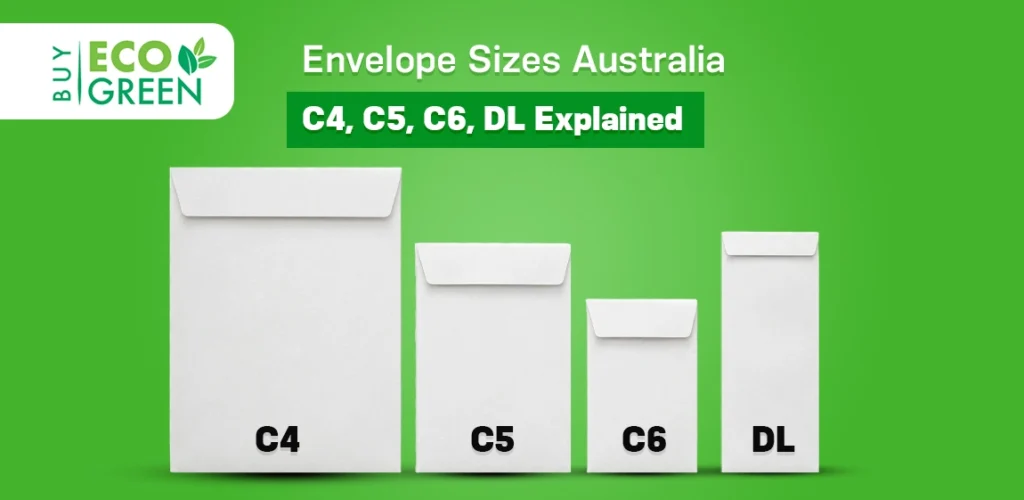
Australian envelope sizes follow the ISO 216 international standard, the same system behind A-series paper. That link is what makes the whole thing logical once you see it. The C-series is built to hold the A-series: a C4 envelope holds an A4 sheet unfolded, a C5 holds an A4 folded once (or an A5 sheet flat), and a C6 holds an A4 folded twice (or an A6 sheet flat). Each size down the range is half the one above it, and the envelopes nest the same way the paper does, so a C6 slips inside a C5 and a C5 inside a C4.
DL is the odd one out. The letters stand for Dimension Lengthways, and it is sized to hold an A4 sheet folded into thirds. It does not fit the neat halving pattern of the C-series, but it is the standard business letter envelope across Australia, which is why most correspondence goes out in one.
When you match contents to an envelope, allow roughly 10mm of clearance so paper slides in cleanly and the seal is not under strain.
C4 Envelopes (229 x 324mm)
A C4 holds a full A4 sheet without a single fold, which makes it the size for anything that should arrive flat and uncreased: annual reports, certificates, printed booklets, brochures and board papers. Because there is no folding, C4 is also the practical choice when you are posting several A4 pages together or including a stiff insert that should not bend. The Buyecogreen C4 recycled envelope is a pocket-style envelope (the opening is on the short edge, so A4 slides straight in) supplied in boxes of 250, and it carries Australian Forestry Standard certification on carbon neutral paper.
C5 Envelopes (162 x 229mm)
A C5 sits between the DL and the C4. It holds an A4 sheet folded once down the middle, or an A5 sheet flat. The single fold is its main advantage: a document that will be read the moment it is opened has fewer crease lines to fight, which matters for certificates, recognition letters and invitations where presentation counts. The Buyecogreen C5 recycled envelope is a wallet-style envelope in natural unbleached eco brown kraft, made in Australia from 100% post-consumer waste paper.
C6 Envelopes (114 x 162mm)
A C6 holds an A4 sheet folded twice, an A5 folded in half, or an A6 card or postcard flat. It is the go-to size for greeting cards, event invitations, reply cards and compliment slips, and it stays within standard letter postage, which keeps mail runs economical. Schools, childcare centres and not-for-profits often pick the eco brown kraft finish here so the outside of the envelope reflects the same values as what is inside. The Buyecogreen C6 recycled envelope is a banker-style envelope supplied in boxes of 450, and it pairs naturally with recycled blank card stock for invitations and notices.
DL Envelopes (110 x 220mm)
The DL is the workhorse. It holds an A4 document folded into thirds lengthways, which covers most everyday administrative mail: letters to parents, official notices, invoices and statements. It fits standard letter trays, runs through franking and stuffing machines, and sits within Australia Post standard letter dimensions. If your organisation is standardising envelope procurement on a single size, this is almost always the one. Buyecogreen stocks it as a plain DL recycled envelope in packs of 100, and as a window version for high-volume runs.
Window, Wallet, Pocket and Banker: Styles and Seals
Size is only part of the spec. Style describes where the envelope opens and how it looks. A wallet opens on the long edge, a pocket opens on the short edge (used for C4 so A4 slides in without bending), and a banker is a wallet with a traditional pointed flap. Seals vary too: lick and stick is the classic gummed flap, while peel and seal or self-seal use a strip you press down without moisture.
Window envelopes have a clear panel that shows the address printed on the document inside, which removes the need to address each envelope by hand on a large mail run. This is where an eco choice matters most. Standard window envelopes use a thin plastic film for the panel, and that plastic contaminates the paper when the envelope is recycled. The Buyecogreen DL window envelope uses a window made from plant-starch cellophane instead, so the whole envelope is biodegradable and can go into paper recycling without a plastic panel to pick out.
Which Envelope Size Should Your Organisation Choose?
Most organisations run on two or three sizes. A DL covers the bulk of day-to-day correspondence. A C4 handles anything that must stay flat, such as reports and certificates. A C5 or C6 rounds out the range for invitations, cards and shorter documents. Councils and government teams sending regular addressed mail benefit from the windowed DL for the volume runs, while schools and not-for-profits tend to keep C6 on hand for community communications. Standardising on this core set keeps ordering simple and cuts down on part numbers to manage. For the square, greeting card and DLX formats that sit outside these four, our full envelope sizes guide covers the rest of the range.
Recycled Envelopes for Greener Procurement
Envelope stock is now reviewed through the same sustainability lens as paper and packaging. The Buyecogreen envelope range is made from 100% post-consumer recycled fibre, is process chlorine-free, and is largely Australian made, which gives procurement officers material claims they can document for sustainability reporting. Switching envelope stock changes nothing about how staff work, so it is one of the lowest-disruption improvements an organisation can make. Envelopes sit within the wider Envelopes, Cards and Wrap category, and pair easily with recycled copy paper and recycled labelsfor a consistent, plastic-conscious mailroom.
Frequently Asked Questions
What size envelope fits an A4 sheet?
A C4 (229 x 324mm) holds an A4 sheet flat with no folding. If you fold the A4, a DL takes it in thirds, a C5 in half, and a C6 folded twice.
What does DL stand for?
DL stands for Dimension Lengthways. The envelope measures 110 x 220mm and holds an A4 sheet folded into thirds, which makes it the standard Australian business letter envelope.
What is the difference between C5 and DL?
Both carry an A4 letter with folding. A C5 (162 x 229mm) needs only one fold and suits documents you want read flat, while a DL (110 x 220mm) folds the sheet into thirds for everyday mail.
Are C4 or square envelopes more expensive to post in Australia?
A C4 usually falls into large letter postage, and square or non-standard shapes can attract higher rates. Check current Australia Post guidelines before committing to a size for a large mail run.
Do recycled envelopes work in printers and franking machines?
Yes. The recycled stock is a strong 115gsm and suits standard letter trays, office printers and franking equipment, including the windowed DL recycled envelope for automated runs.
Order Recycled Envelopes for Your Organisation
Standardising your envelope range or moving to recycled stock? The Buyecogreen team can help you match the right sizes to your mailing and set up bulk supply across DL, C4, C5 and C6. Call 1300 663 488 or email info@buyecogreen.com.au to discuss a wholesale enquiry.